




Commissioning Best Practices: From Theory to Field

digital learning for industrial engineers

Learn how new engineers can bridge the gap between design theory and real-world execution with commissioning best practices that ensure safety, performance, and reliability.

Introduction: The Bridge Between Theory and Reality

commissioning best practices

Engineering education lays the foundation — equations, design logic, thermodynamics — but commissioning is where those theories come alive.
It’s not just about turning on systems; it’s the systematic validation that each subsystem performs as designed, safely and efficiently.

For new engineers, commissioning is the most practical stage of learning. It’s where they develop situational awareness, field communication, and respect for process discipline.

Whether you’re starting at a cryogenic nitrogen plant, a power station, or a manufacturing facility, mastering commissioning best practices sets the tone for your entire engineering career.

This guide reflects real commissioning practices used across cryogenic nitrogen plants and industrial systems. It captures lessons typically learned only through years of field exposure — now structured for engineers entering commissioning roles.

1. What Is Commissioning — and Why It Matters

Commissioning is the controlled process of verifying that all components — mechanical, electrical, and control — operate according to design specifications.

It ensures:

  • equipment safety

  • system reliability

  • design performance verification

  • compliance with operating and safety standards

A successful commissioning process validates design intent and builds operator confidence for long-term performance.

Explore our “Cryogenic Nitrogen Plant Commissioning Checklist (PDF)” — a structured educational guide designed to support clear and systematic commissioning practices.

2. The Theory–Field Gap for New Engineers

In classrooms, everything works perfectly.
In real plants, pressure drifts, temperature lags, and unexpected alarms are part of the learning curve.

The biggest challenge for new engineers isn’t technical knowledge — it’s context. Field situations demand judgment, quick decisions, and coordinated teamwork.

For example, consider a typical compressor start-up scenario:
Understanding the sequence in theory is straightforward, but knowing when to pause due to an unusual vibration trend requires practical awareness — the kind that develops through structured observation and guided experience.

Pro Tip:
Always shadow experienced engineers during your first few commissioning projects. Pay attention to how they interpret data trends, not just alarms.

3. Key Phases of the Commissioning Process

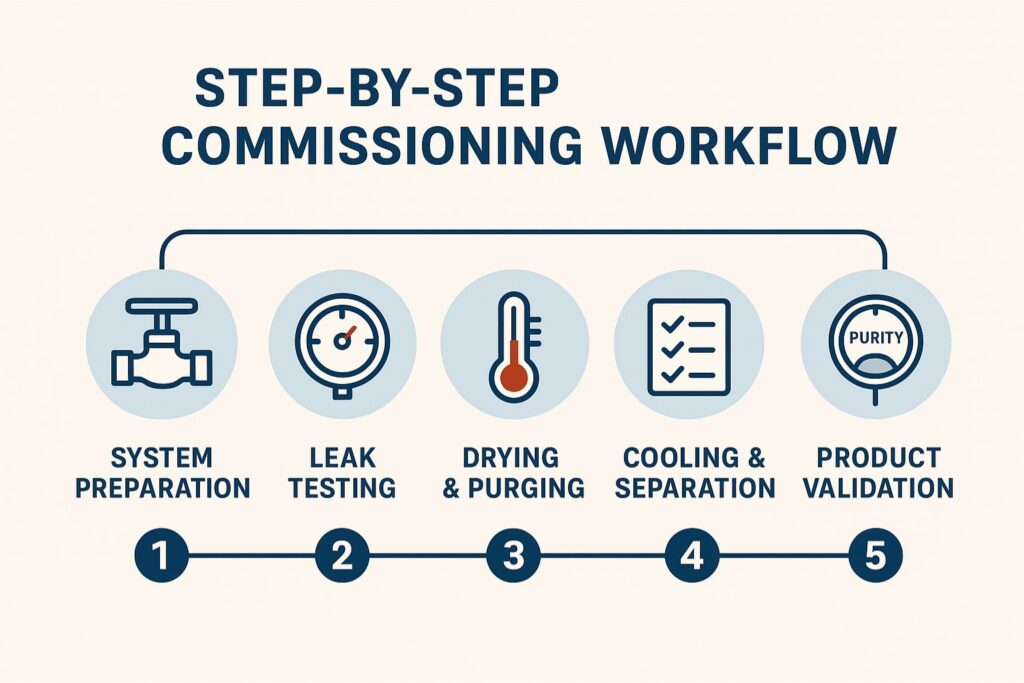
Mastering commissioning best practices begins with understanding its core stages:

Pre-Commissioning

  • Instrument calibration

  • Pressure testing

  • Flushing and drying
    (Image: Technicians working on valves and gauges)

Cold Commissioning

  • Checking interlocks and logic

  • Verifying system readiness

Hot Commissioning

  • Live operation trials under controlled load

Performance Test & Handover

  • Verifying design performance

  • Documentation and final reporting

Each phase demands focus, patience, and strict adherence to safety and documentation standards.

“For broader industry context, consult resources from international cryogenics associations, including guidance published by the British Cryogenics Council.”

4. Safety: The Foundation of All Commissioning Work

No matter how urgent the schedule, safety comes first.
Before starting any test, confirm that:

  • Lockout/Tagout (LOTO) procedures are in place

  • PPE is worn correctly

  • Gas venting and purging systems are clear

  • Emergency stop circuits are functional

Safety isn’t a checklist — it’s a culture. Following commissioning best practices ensures every team member returns home safely.


👉See our “Safety Guidelines for Cryogenic Systems (Infographic + PDF)” — a clear, educational resource designed to support safe planning and awareness.

5. Documentation Discipline

Commissioning generates enormous data — test results, deviations, calibration logs, and vendor reports.

For new engineers, learning how to record data clearly is as crucial as running tests.
Well-documented commissioning reports are valuable for:

  • troubleshooting future issues

  • meeting audit and quality standards

  • enabling knowledge transfer between teams

Use digital tools to streamline documentation — structured checklists, digital forms, and shared logbooks are now industry standards.

Ensure safety and compliance by following relevant OSHA workplace safety standards and recognized  Cryogenic Safety Guidelines .

6. Teamwork and Communication in the Field

Commissioning brings together multidisciplinary teams — mechanical, electrical, instrumentation, and process engineers.

Clear communication is vital:

  • Use standardized reporting formats

  • Clarify responsibilities during toolbox meetings

  • Maintain version control for drawings and checklists

Industry Insight: Strong communication prevents technical errors more effectively than any tool or software.

7. Modern Tools & Digital Resources

Understand key risks, safe handling procedures, and oxygen deficiency prevention measures — essential for every cryogenic operation.

Technology is transforming how commissioning is managed.
Modern digital commissioning tools help engineers:

  • monitor live parameters from DCS dashboards

  • use mobile apps for digital checklists

  • track real-time test progress

At Grap

Technology is transforming how commissioning is managed.
Modern digital commissioning tools help engineers:

  • monitor live parameters from DCS dashboards

  • use mobile apps for digital checklists

  • track real-time test progress

At Graphic Medium Industrial, we develop structured digital tools and PDFs that simplify commissioning for both new and experienced engineers.

📘 Explore: “Top 10 Common Problems During Nitrogen Plant Start-Up (and How to Fix Them)”   — an educational resource designed to support learning and systematic troubleshooting.

8. Learning Through Mentorship

Cryogenic nitrogen plant safety

Every engineer remembers their first field mentor.
The best lessons in commissioning best practices come from observing seasoned professionals:

  • how they troubleshoot calmly

  • how they prioritize safety

  • how they lead with quiet confidence

Don’t just do tasks — understand the reasoning behind each action.

9. Common Mistakes to Avoid During Commissioning

Even the most skilled engineers make errors early on. Some common pitfalls:

  • ignoring system readiness checklists

  • overlooking communication gaps

  • failing to verify instrument tags

  • rushing documentation

Following structured commissioning best practices helps avoid rework and costly delays.

Explore resources on platforms like Engineering Toolbox for general commissioning concepts and reference material.

10. Building a Commissioning Mindset

nitrogen plant start up problems

Commissioning teaches humility. Machines don’t always behave as expected — but that’s where learning happens.

For new engineers:

  • Stay curious

  • Keep learning beyond your job role

  • Always correlate field data with theory

In time, you’ll move from “following instructions” to “leading teams.”

Conclusion: Turning Knowledge into Confidence

Commissioning is more than an engineering process — it’s the transformation of design into reality.

For new engineers, mastering commissioning best practices means developing:

  • Field awareness

  • Technical adaptability

  • A respect for safety and documentation

At Graphic Medium Industrial, our goal is to convert these lessons into   digital knowledge tools — from structured PDFs to visual infographics — helping engineers work smarter, safer, and faster.

Start Your Commissioning Journey with Graphic Medium

Scroll to Top