


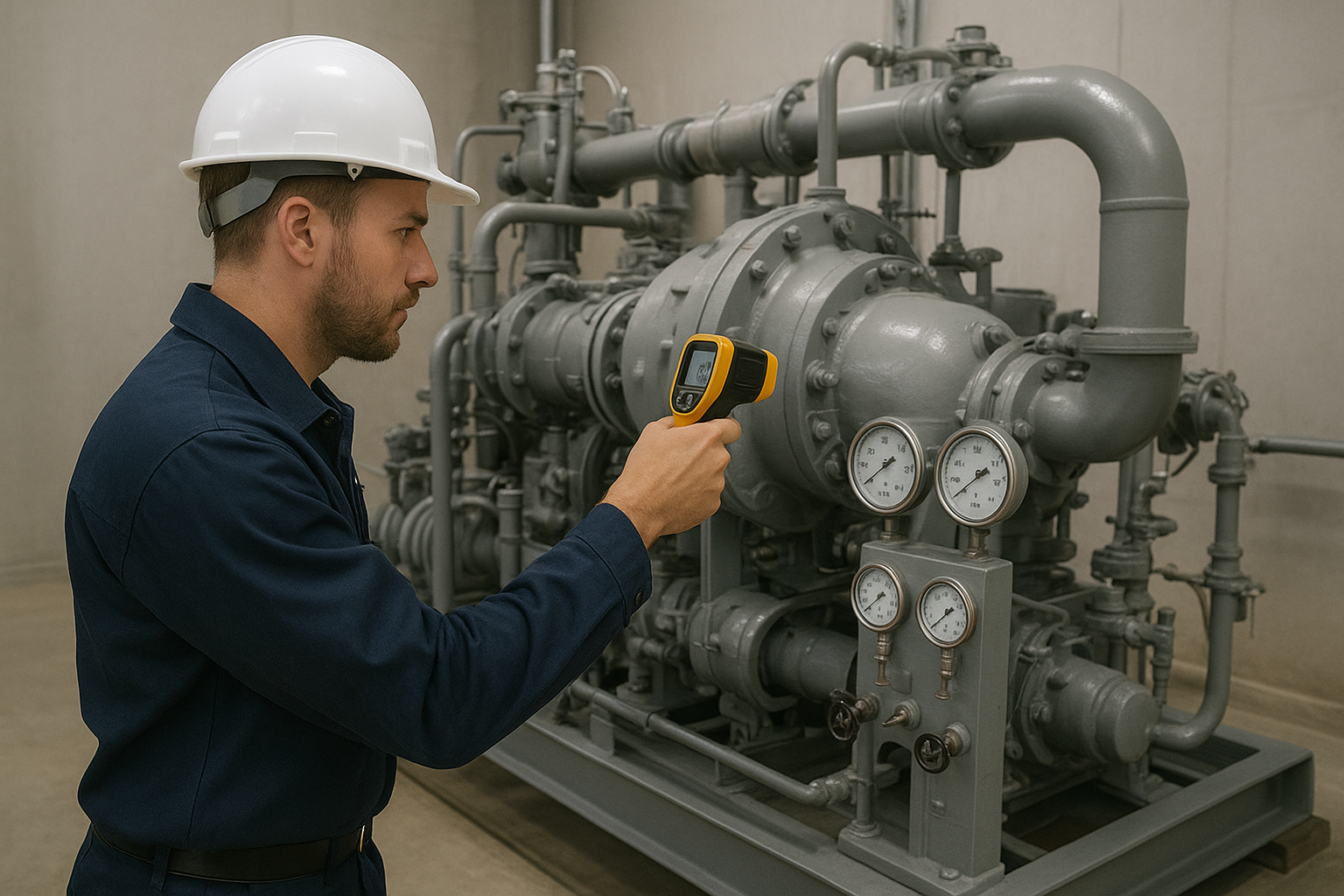
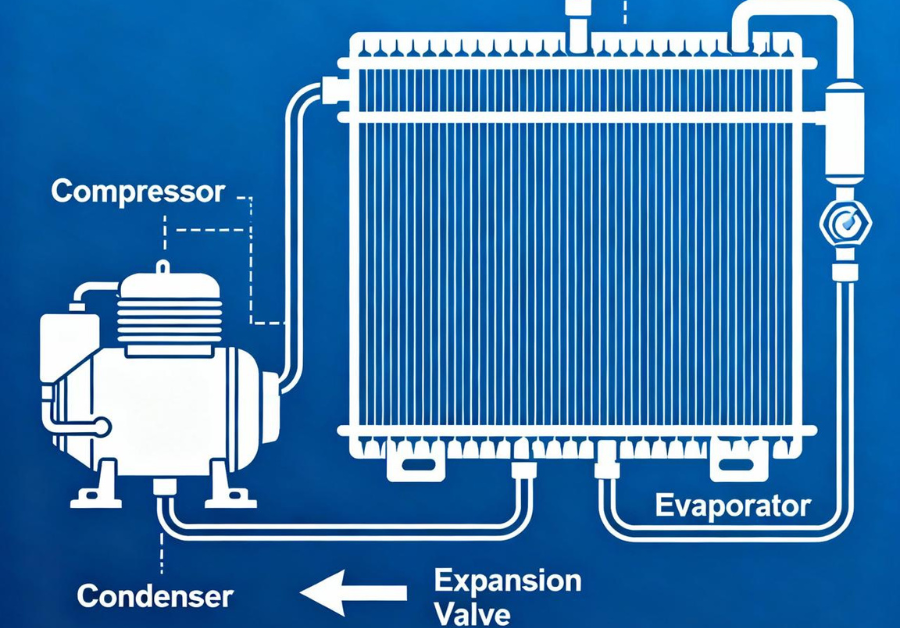
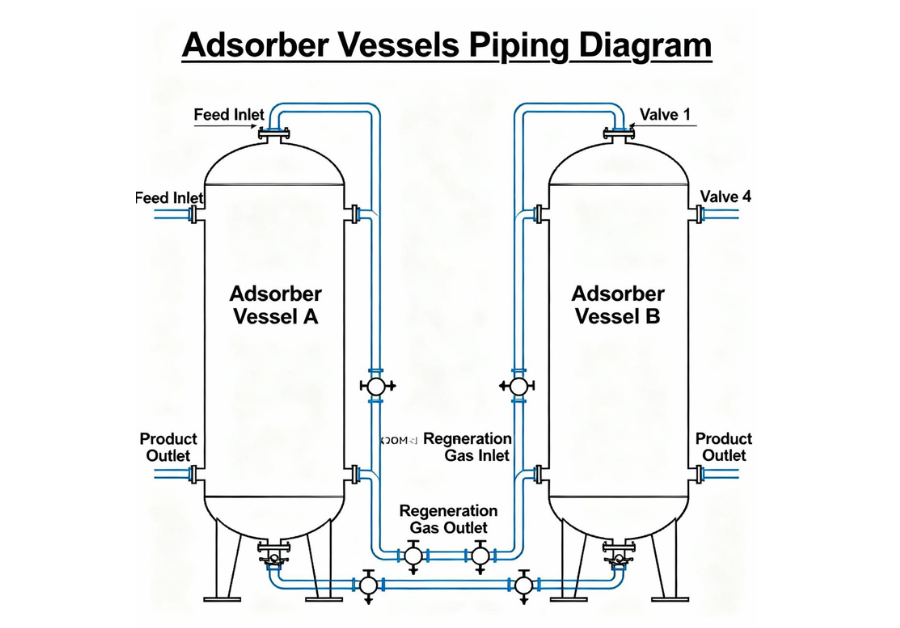
In this phase, moisture and carbon dioxide (CO₂) are removed from the cooled air using molecular sieve–based purification units. These impurities can freeze under cryogenic conditions, so their removal is essential for safety and reliability.
Why Pretreatment Failure Causes Cold Box Freezing.
During cryogenic nitrogen plant commissioning, the checklist typically includes:
Checking regeneration heater operation and cycle timing.
Verifying the efficiency of desiccant beds.
Monitoring dew point and CO₂ analyzer readings.
Consistent dew point readings confirm that the air is fully conditioned for entry into the cryogenic air separation unit (ASU).
For engineers assessing drying effectiveness and breakthrough risks during commissioning, the CO₂ & moisture impact guide explains how trace contaminants affect cold box performance, purity stability, and long-term operational reliability.
For deeper diagnostics, also see: Cold Box Freezing in Nitrogen Plants — Causes and Recovery
The cold box is the heart of the cryogenic nitrogen plant and plays a critical role during commissioning and performance stabilization.
During cryogenic nitrogen plant commissioning, engineers focus on:
Verifying proper operation of control valves, expansion turbines, and heat exchangers.
Ensuring the column pressures and temperatures match design data.
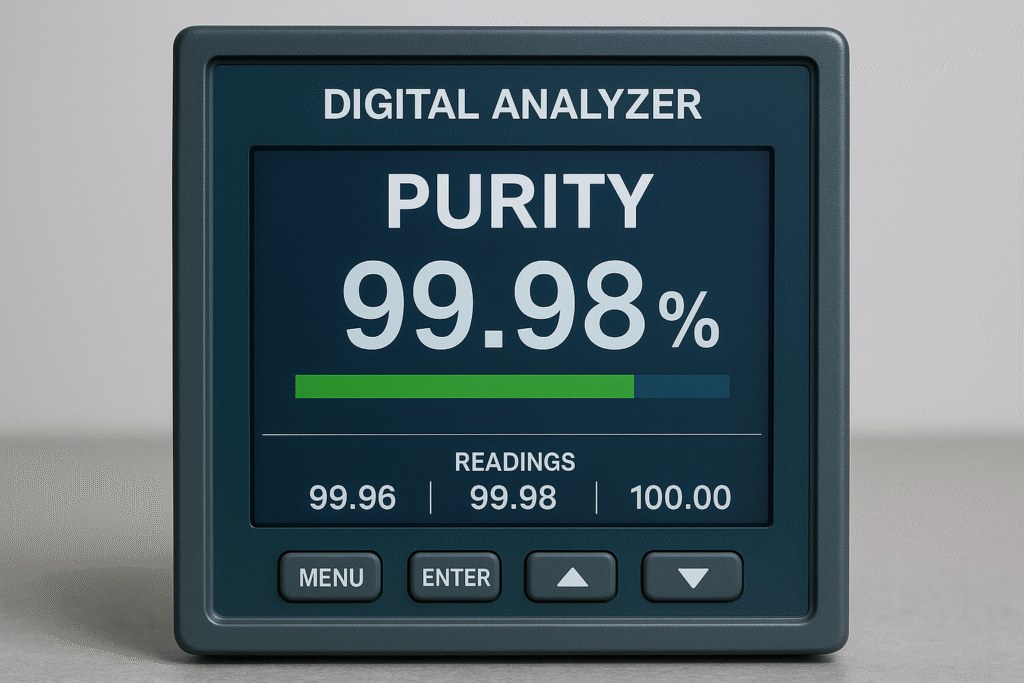
Recording nitrogen purity and oxygen concentration in product gas.
This step determines whether the plant can achieve design capacity and product purity targets. Any variation at this stage must be carefully analyzed before moving to performance trials.
During initial cooldown and stabilization, the cold box temperature mapping sheet helps engineers track temperature gradients, identify maldistribution, and detect early signs of thermal imbalance before purity is affected.
If temperature imbalance or purity instability persists, engineers often need structured troubleshooting beyond startup checks. Explore the Cryogenic Nitrogen Plant Troubleshooting Toolkit
For additional background on cryogenic science and safety principles, you may refer to publicly available resources from major industrial gas companies and technical organizations.
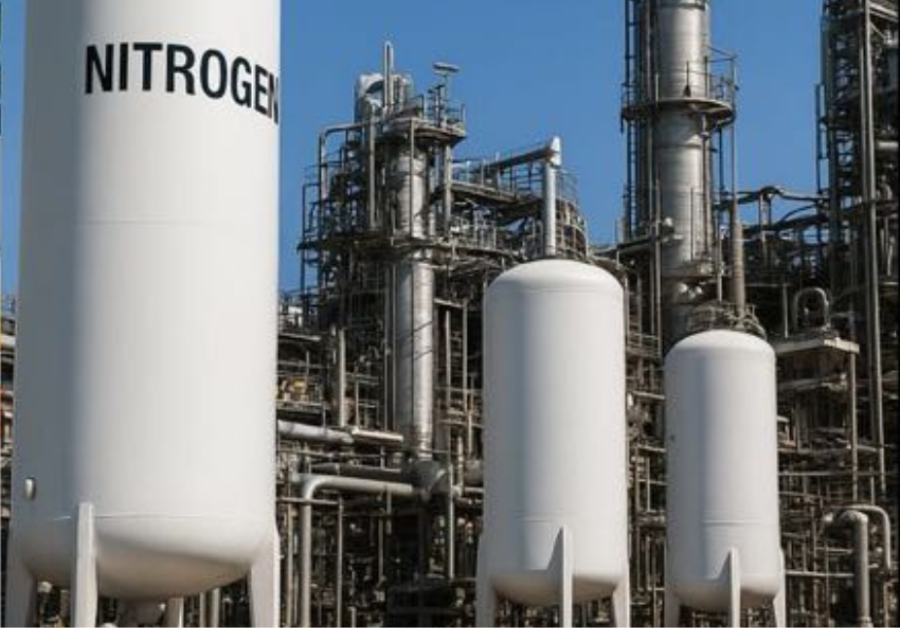
Once the separation process is stabilized, the focus shifts to product delivery — ensuring that nitrogen purity, pressure, and flow meet specifications. During the final phase of cryogenic nitrogen plant commissioning, engineers perform the performance guarantee test (PGT) or trial run.
This phase includes:
Testing product pipelines and valves for leaks.
Verifying control room instrumentation and alarms.
Recording nitrogen flow, purity, and power consumption data.
A successful trial run marks the completion of the commissioning phase, transitioning the system into steady-state operation.
Why Plants Fail Performance Guarantee Tests
unstable operation
refrigeration inefficiency
pretreatment breakthrough
control tuning
Read more: Why Nitrogen Plants Fail Performance Guarantee Tests (and How to Recover)
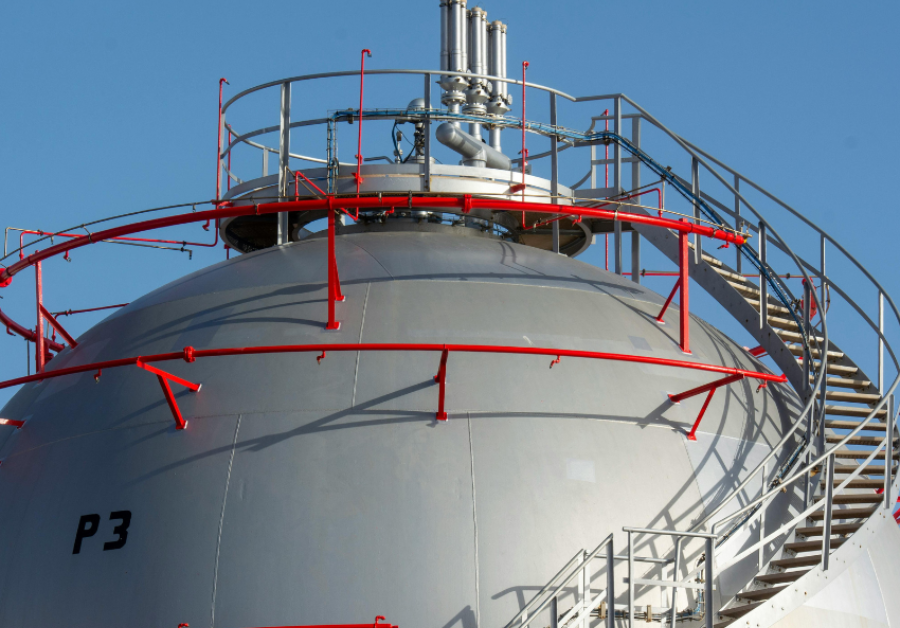

Before starting the actual process, pre-commissioning ensures readiness of all systems — mechanical, electrical, and instrumentation.
a. Documentation Review
Verify that all P&IDs, PFDs, and as-built drawings are up to date. Marking incorrect line numbers or missing tags at this stage prevents major errors later.
b. Mechanical Completion
Ensure mechanical completion certificates are signed off:
All pipelines are hydrotested.
Valves are tagged and installed in correct direction.
Supports, insulation, and expansion joints are checked.
c. Instrumentation and Control Check
Field transmitters are calibrated.
Control logic in DCS/PLC is verified.
Manual/auto control modes are simulated.
To ensure commissioning decisions are based on reliable data, the instrument validation checklist provides a structured method for verifying sensor accuracy, loop integrity, and signal consistency before relying on live readings.
Poor instrument validation is a major reason for unstable startup and trend misinterpretation. See: How to Read Nitrogen Plant Trends to Predict Failures
d. Safety System Validation
Interlocks are tested (for example, low suction trip on compressor).
Emergency shutdown (ESD) system is verified.
Safety relief valves are installed and tagged correctly.
For a full safety review during commissioning and operation: Download the Cryogenic Nitrogen Plant Safety Checklist
e. Utilities Readiness
Power supply and earthing system available.
Cooling water, instrument air, and nitrogen purge supply confirmed.
Communication lines and alarms tested.

Cryogenic systems are highly sensitive to moisture. Even trace water vapor can freeze and block lines during cooldown.
Inadequate drying is one of the most common causes of cold box icing during startup.
See: Cold Box Freezing in Nitrogen Plants — Causes and Prevention
a. System Flushing
Flush process lines with clean dry air or nitrogen to remove debris or oil residues.
b. Drying and Purging
Use dry nitrogen purge until dew point < –60°C.
Record dew point readings at multiple locations (cold box, storage lines, exchanger outlet).
Confirm absence of condensate in traps or low points.
c. Leak Testing
Conduct helium or nitrogen pressure tests:
Maintain pressure for 24 hours and monitor for any drop.
Check joints with soap solution or leak detector spray.
Even small air ingress points can introduce moisture and CO₂ into the cold box over time, leading to gradual freezing and pressure drop.

Once the system is dry and leak-free, the critical part begins — cooldown and process initiation.
a. Controlled Cooldown
Initiate cooling using gaseous nitrogen in bypass mode.
Monitor temperature drop rate (not more than 10°C per minute to avoid thermal stress).
Gradually introduce cold nitrogen from heat exchangers.
b. Compressor Start-Up
Confirm lube oil and seal gas systems are primed.
Start compressor under manual mode, slowly raise suction pressure.
Verify pressure, temperature, and vibration readings.
c. Cold Box Operation
Maintain proper differential between column and exchanger.
Observe liquid formation rate in separator.
Record data at intervals — column top/bottom temp, pressure, purity.
During cooldown and stabilization, structured trend logging helps detect early instability patterns. Download the Trend Reading Pattern Guide
Need pre-commissioning documentation that’s structured and ready for field use? Get the Cryogenic Nitrogen Plant Commissioning Toolkit — checklists, start-up charts, and documentation templates.

Even a well-planned commissioning can face field challenges.
Here are common troubleshooting issues and recommended approaches.
Many commissioning failures originate from pretreatment instability, refrigeration imbalance, or control tuning errors — not mechanical defects.
| Issue | Likely Cause | Action |
|---|---|---|
| Low nitrogen purity | Distillation imbalance | Adjust reflux ratio / column temperature |
| Excessive pressure drop | Ice or blockage | Warm-up and re-dry affected section |
| Vibration in compressor | Unbalanced load or alignment issue | Verify foundation, coupling, and load |
| High liquid carryover | Incorrect reflux or liquid level | Adjust reflux ratio and drain settings |
| Low production rate | Compressor not at design speed | Check suction pressure, motor load |
| Frost formation | Leaks or poor insulation | Inspect and reseal joints |
| Unstable pressure | Faulty control loop | Tune PID parameters |
These quick actions solve surface symptoms, but persistent problems require structured fault isolation. Explore the Cryogenic Nitrogen Plant Troubleshooting Toolkit for step-by-step diagnostic workflows.

Safety is at the core of cryogenic nitrogen plant commissioning. Working with cryogenic temperatures and high-pressure systems demands disciplined adherence to safety procedures.
a. PPE & Safety Practices
Use cryogenic gloves, face shields, and insulated boots.
Keep all personnel trained in cold burn first-aid.
Avoid contact with uninsulated cold surfaces.
b. Oxygen Safety
During cooldown, air ingress may enrich oxygen concentration in vents or enclosures.
Use portable O₂ monitors and ensure proper ventilation.
Oxygen deficiency and enrichment hazards are among the most serious risks during cryogenic commissioning. Download the Cryogenic Nitrogen Plant Safety Checklist for shift-level safety verification.
c. Pressure Relief & Venting
All vent lines must discharge safely away from personnel.
Relief valves should be verified for correct set pressure and flow direction.
d. Emergency Preparedness
Conduct mock ESD drills before live commissioning.
Define communication chain and control room protocols.
If repeated alarms, leaks, or unsafe conditions appear during commissioning, engineering-level safety review is recommended. Request Industrial Safety & Commissioning Support
At Graphic Medium Industrial, we emphasize that safe commissioning is not just a checklist activity — it’s a mindset built on training, teamwork, and attention to detail.

After achieving stable operation, the system is validated against design performance.
a. Performance Testing
Record flow, purity, and power consumption over 24 hours.
Compare with design parameters (±5% tolerance typical).
Obtain third-party witness or client sign-off.
If test values fall outside contract limits, see: Why Nitrogen Plants Fail Performance Guarantee Tests (and How to Recover)
b. Documentation Package
Prepare and submit:
Commissioning log sheets
Calibration reports
Safety test certificates
Training and handover documents
Structured documentation prevents disputes and speeds final acceptance. Use templates from the Commissioning & Stability Toolkit
c. Final Handover
Once performance and documentation are approved, the plant transitions to operations phase.
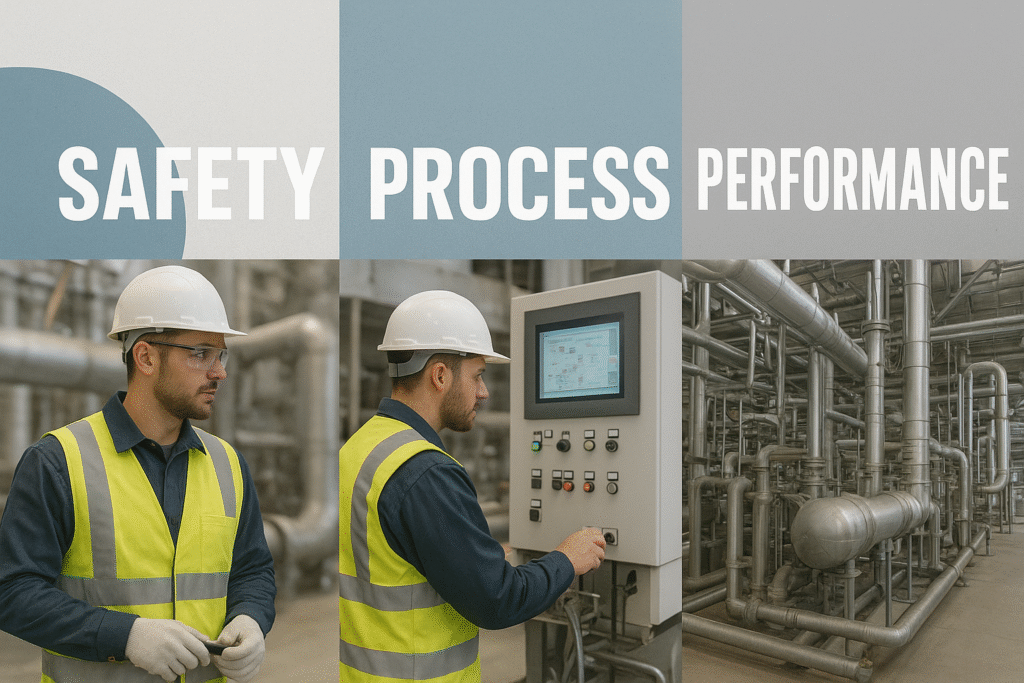
A structured cryogenic nitrogen plant commissioning plan ensures that every subsystem — mechanical, electrical, instrumentation, and process — performs as a unified system.
Benefits of a structured approach include:
Early detection of mechanical and process defects.
Reduced downtime during the initial production phase.
Better documentation for future maintenance and audits.
Improved nitrogen yield and reduced specific power consumption.
With a digital checklist and documented sequence, engineers can replicate success across multiple projects with consistency and confidence.
Structured commissioning is not just methodology — it requires practical tools engineers can use in the field.


Pingback: How to Read Nitrogen Plant Trends to Predict Failures Before They Happen -