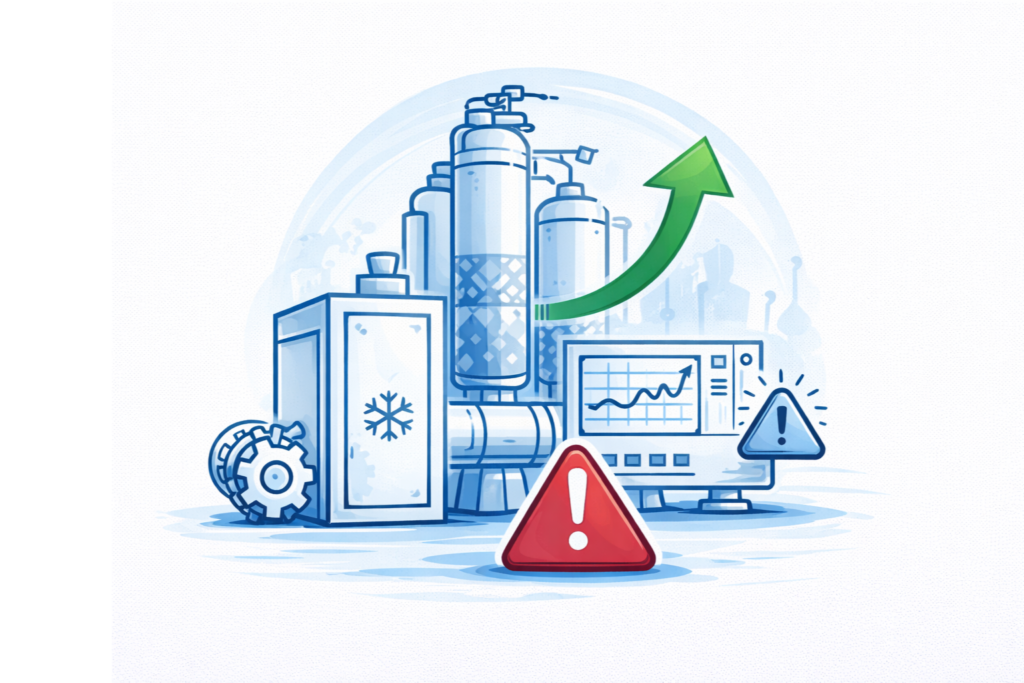
Startup Instability in Cryogenic Nitrogen Plants

Understanding the causes, symptoms, and engineering solutions for startup instability in cryogenic nitrogen plants.

Startup Instability in Cryogenic Nitrogen Plants

Startup procedures in cryogenic nitrogen plants involve gradual cooling, stabilization of distillation columns, and controlled adjustment of process parameters. During this phase, the plant transitions from ambient conditions to extremely low cryogenic temperatures while establishing stable separation conditions.

However, disturbances during this process can lead to startup instability in cryogenic nitrogen plants. Unstable pressure profiles, refrigeration imbalance, or improper control adjustments may prevent the plant from achieving stable nitrogen production.

Understanding the causes and operational indicators of startup instability in cryogenic nitrogen plants helps plant engineers manage the startup process more effectively and avoid repeated shutdowns or prolonged startup periods.

🔷Quick Engineering Summary for Plant Engineers

• Startup instability in cryogenic nitrogen plants occurs during plant commissioning or restart procedures.
• Refrigeration imbalance and column pressure fluctuations are common causes.
• Improper control system adjustments may disrupt process stabilization.
• Monitoring key parameters during startup helps prevent operational instability.
• Structured startup procedures improve plant reliability.

Operational Symptoms of Startup Instability in Cryogenic Nitrogen Plants

During plant startup, several operational indicators may signal developing instability. Recognizing these symptoms allows engineers to take corrective action before process conditions become unstable.

Startup instability may also lead to temporary variations in nitrogen purity until the distillation column reaches stable operating conditions. Similar disturbances are discussed in the guide on nitrogen purity fluctuation in cryogenic nitrogen plants.

Column Pressure Fluctuation

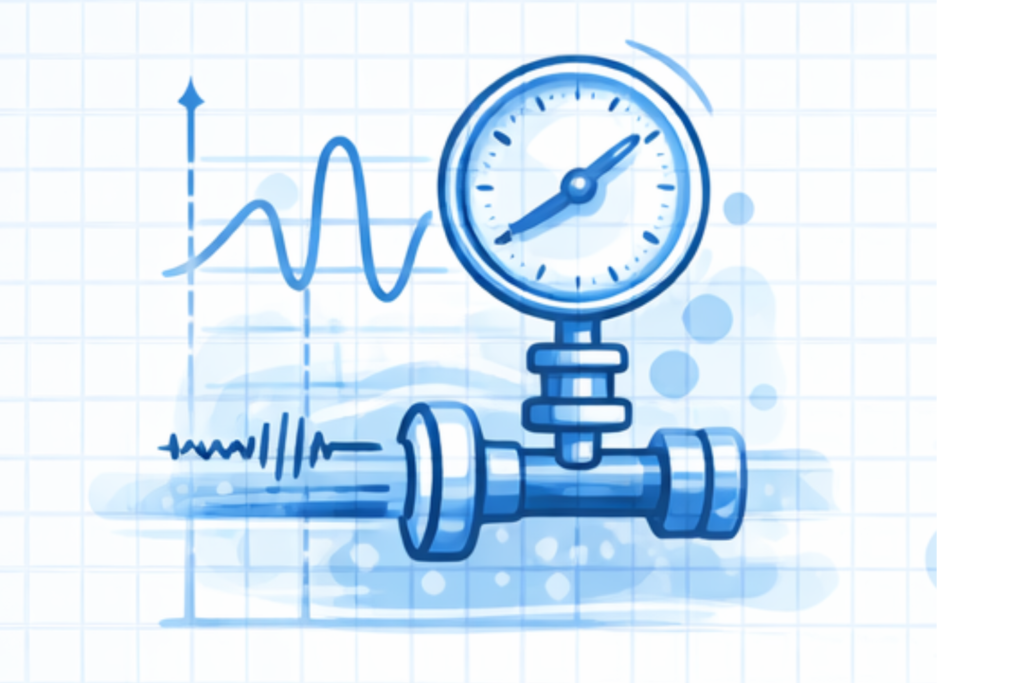
Unstable pressure within the distillation column may indicate imbalance in vapor-liquid equilibrium.

Cold Box Temperature Oscillation

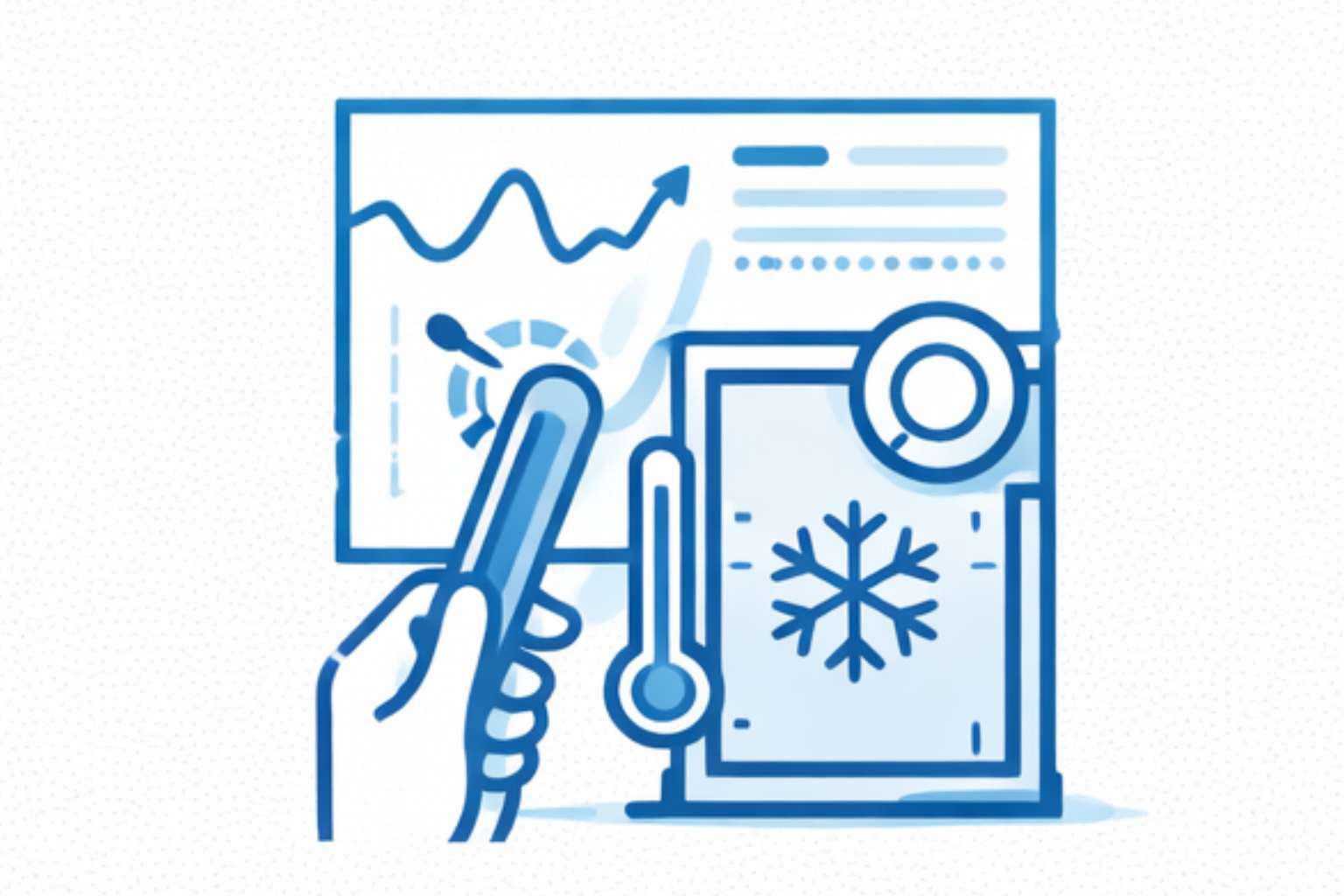
Temperature profiles across heat exchangers may fluctuate during unstable startup conditions.

Expander Speed Variations

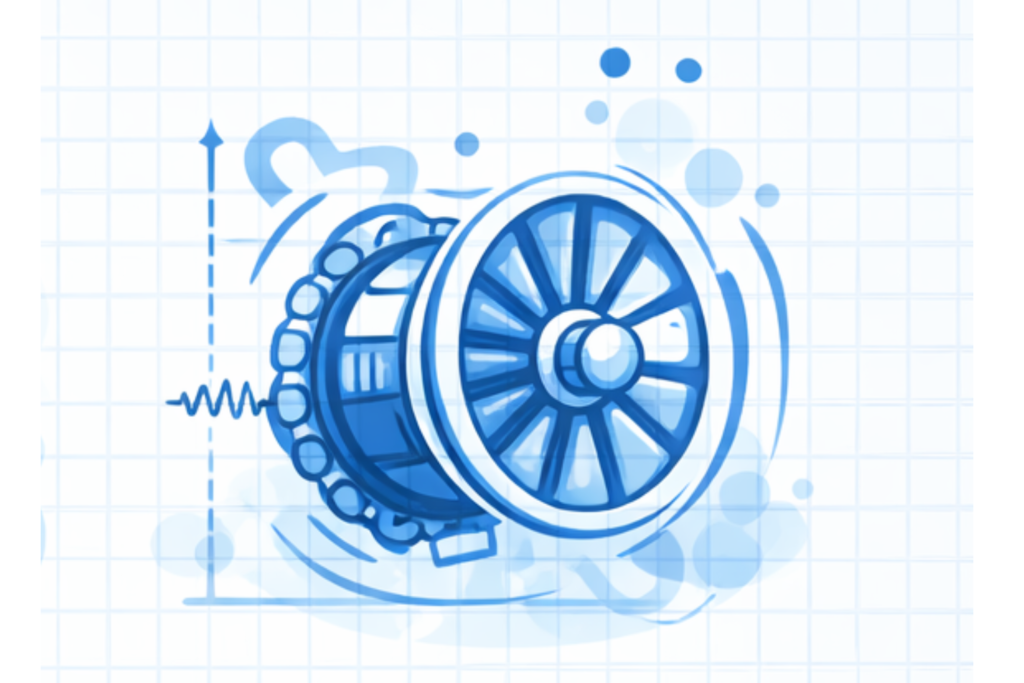
Expander performance may become unstable if refrigeration balance is not properly established.

Nitrogen Purity Instability

Nitrogen purity may fluctuate while the distillation column approaches stable operating conditions.

Liquid Level Instability in Column

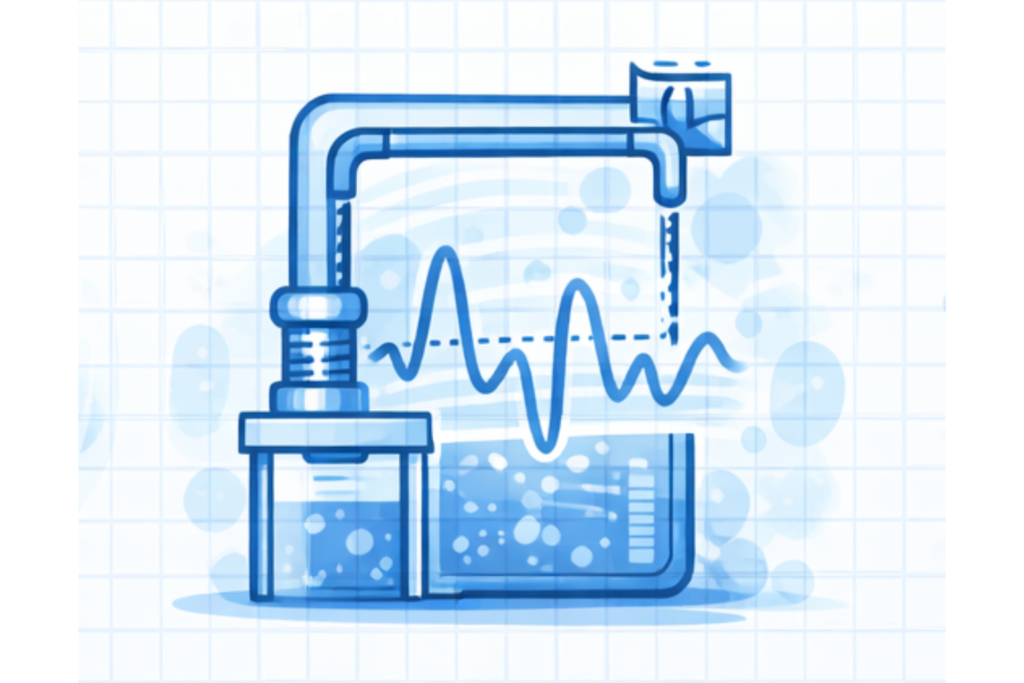
Rapid changes in liquid levels within distillation columns may indicate unstable separation conditions.

Control System
Alarm Activity

Frequent alarms from the control system may signal unstable process parameters during startup.

Why Startup Instability in Cryogenic Nitrogen Plants Matters

Startup is one of the most critical operating phases of a cryogenic nitrogen plant. During startup, multiple process systems — including the air compression system, molecular sieve purification unit, refrigeration cycle, and distillation column — must gradually stabilize before the plant reaches steady operation.

Any instability during this phase can disrupt the delicate balance required for cryogenic separation.

When process conditions fluctuate during startup, the plant may experience:

• delayed cooldown of the cold box
• unstable column pressure and temperature profiles
• expander speed fluctuations
• product purity instability
• increased risk of automatic plant trips

These disturbances can extend startup time, increase energy consumption, and place unnecessary mechanical stress on key equipment.

For plant engineers and operators, understanding the causes of startup instability is essential for maintaining safe and efficient plant commissioning. A stable startup sequence allows refrigeration systems, distillation columns, and control systems to gradually reach their designed operating conditions.

Without proper control of startup parameters, even a well-designed nitrogen plant may struggle to achieve stable operation.

Careful monitoring of operating parameters — such as column pressure, expander performance, cold box temperature profiles, and product purity trends — enables engineers to detect early signs of instability and take corrective action before the plant experiences operational disturbances or shutdowns.

Understanding why startup instability occurs is therefore a key step toward improving plant reliability, reducing startup time, and maintaining consistent nitrogen production.

Major Causes of Startup Instability in Cryogenic Nitrogen Plants

Common engineering factors that disrupt stable plant startup conditions

Startup instability in cryogenic nitrogen plants is usually caused by disturbances in key process parameters during the initial cooling and stabilization phase of plant operation. Unlike steady-state operation, startup conditions require careful balancing of refrigeration, column pressure, and flow distribution.

Several operational and equipment-related factors can lead to unstable plant behavior during startup.

Unstable feed air conditions during startup may also be influenced by upstream purification problems such as molecular sieve failure in nitrogen plant systems.

1. Improper Cooling Rate of the Cold Box

During startup, the cold box must be cooled gradually to prevent thermal imbalance across the heat exchanger and distillation column.

If cooling occurs too rapidly, temperature gradients may develop inside the heat exchanger passages and distillation trays. This can disturb vapor-liquid equilibrium and lead to unstable column operation.

2. Expander Operational Instability

The turbo expander plays a critical role in providing refrigeration during plant startup.

If expander speed fluctuates or the load varies significantly, the refrigeration balance of the plant becomes unstable. This may cause temperature swings in the cold box and disrupt column separation performance.

3. Unstable Feed Air Flow

Stable feed air flow is essential for maintaining proper column pressure and vapor-liquid equilibrium.

Rapid changes in compressor load, feed air flow, or suction pressure can disturb column hydraulics and create fluctuations in nitrogen purity during startup.

4. Improper Reflux in Distillation Column

The distillation column requires adequate reflux flow to establish stable nitrogen-oxygen separation.

If reflux flow is insufficient during startup, separation efficiency decreases and product purity may fluctuate until stable column conditions are achieved.

5. Instrumentation and Analyzer Lag

During startup, process analyzers and temperature instruments may experience response delays as system temperatures change rapidly.

Delayed or inaccurate readings can lead operators to make unnecessary adjustments to operating parameters, which may further destabilize the startup process.

6. Control System Tuning Issues

Poorly tuned control loops for pressure, flow, or temperature can amplify small disturbances during startup.

Control valves may over-correct process fluctuations, leading to oscillations in column pressure, expander load, and nitrogen purity.

Diagnostic Approach Used by Plant Engineers

Structured troubleshooting workflow used to stabilize plant startup

When startup instability occurs in cryogenic nitrogen plants, plant engineers typically follow a systematic diagnostic approach rather than making immediate operating adjustments. Because multiple process variables change simultaneously during startup, identifying the correct root cause requires careful observation of plant behavior and analysis of key operating parameters.

A structured diagnostic process helps engineers isolate the source of instability and avoid unnecessary changes that could further disturb plant operation.

1. Review Cold Box Temperature Profile

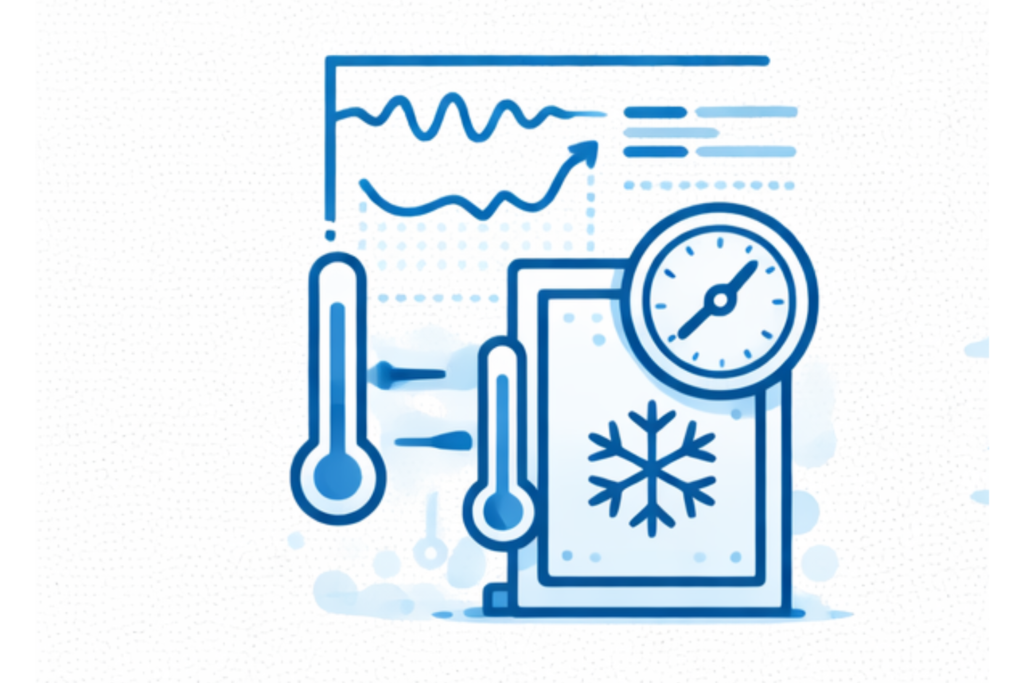
The first diagnostic step is to examine the temperature profile across the main heat exchanger and cold box sections. Engineers analyze temperature trends to determine whether the plant is cooling at a stable and controlled rate. Uneven cooling or sudden temperature fluctuations often indicate refrigeration imbalance or unstable expander operation.

2. Verify Expander Operating Conditions

The turbo expander performance is closely monitored during startup because it directly controls refrigeration generation. Engineers check parameters such as: • Expander speed • Inlet and outlet temperatures • Pressure ratio across the expander • Load stability Any abnormal fluctuation in these parameters may indicate expander control issues or unstable feed conditions.

3. Evaluate Feed Air Flow and Pressure Stability

Stable feed air flow and pressure are critical for maintaining proper column hydraulics during startup. Plant engineers review compressor load trends, suction pressure, and feed flow measurements to determine whether the incoming air supply is stable. Sudden variations in feed air conditions can quickly destabilize column pressure and separation efficiency.

4. Analyze Distillation Column Pressure Behavior

Engineers closely monitor distillation column pressure trends to identify abnormal oscillations. Pressure instability may indicate: • improper reflux establishment • vapor-liquid imbalance • fluctuating feed air conditions • control valve instability Maintaining steady column pressure is essential for achieving stable nitrogen separation.

5. Check Instrumentation and Analyzer Response

During startup, engineers verify that process analyzers and temperature instruments are responding correctly. Analyzer lag or calibration issues can produce misleading readings that may cause unnecessary operating adjustments. Confirming measurement reliability ensures that operational decisions are based on accurate plant data.

6. Review Control System Response

The final diagnostic step involves evaluating control loop behavior within the plant automation system. Engineers examine how pressure, flow, and temperature control loops respond to changing conditions during startup. Poorly tuned control loops can amplify process disturbances and create oscillations in key process variables.
By systematically reviewing these process parameters, plant engineers can determine whether startup instability originates from refrigeration imbalance, feed air disturbances, column operating conditions, or control system response.

A structured diagnostic approach ensures that corrective actions are applied in the correct area of the process, allowing the plant to transition smoothly from startup conditions to stable nitrogen production.

Key Engineering Insight

Startup instability often occurs when process parameters are adjusted too quickly before the distillation column has reached stable thermodynamic conditions.

Allowing sufficient time for temperature stabilization and maintaining gradual parameter adjustments significantly improves startup reliability in cryogenic nitrogen plants.

Engineering Solutions for Startup Instability in Cryogenic Nitrogen Plants

Practical operational measures to stabilize plant startup

Once the source of startup instability has been identified, plant engineers can implement targeted operational adjustments to restore stable plant conditions. Effective solutions typically focus on stabilizing refrigeration balance, maintaining controlled cooling of the cold box, and ensuring proper establishment of column separation conditions.

Applying these corrective measures helps the plant transition smoothly from startup conditions to stable nitrogen production.

1. Control the Cold Box Cooling Rate

During plant startup, the cold box should be cooled gradually to avoid thermal stress and temperature imbalance across the heat exchanger.

Engineers should monitor temperature gradients and adjust refrigeration input to maintain a controlled cooling profile. Gradual temperature reduction allows the distillation column and heat exchanger to stabilize before full operation is established.

2. Stabilize Expander Operation

The turbo expander must operate under stable load conditions to provide consistent refrigeration.

Engineers can stabilize expander performance by maintaining steady inlet pressure, avoiding rapid changes in flow, and ensuring proper control valve response. Smooth expander operation helps prevent temperature fluctuations in the cold box.

3. Maintain Stable Feed Air Flow

Stable feed air flow is essential for maintaining column pressure and vapor-liquid equilibrium.

During startup, compressor loading and feed flow adjustments should be introduced gradually. Avoiding sudden changes in feed air conditions helps prevent disturbances in column hydraulics.

4. Establish Proper Reflux Conditions

Adequate reflux flow is necessary to initiate stable nitrogen separation inside the distillation column.

Engineers should ensure that reflux streams are properly established and stabilized before increasing plant throughput. Stable reflux improves column separation efficiency and reduces purity fluctuations.

5. Verify Instrument and Analyzer Stability

Process analyzers and temperature instruments should be verified for stable operation during startup.

Allowing sufficient stabilization time for measurement instruments helps ensure accurate readings. Reliable instrumentation prevents unnecessary operating adjustments caused by incorrect process data.

6. Optimize Control System Response

Proper tuning of control loops is critical for stable plant startup.

Engineers may need to adjust control parameters for pressure, flow, and temperature loops to avoid aggressive control responses. Well-tuned control systems help dampen process disturbances and maintain steady plant conditions.

By implementing these engineering solutions, plant engineers can significantly reduce startup instability and shorten the time required for the plant to reach stable operating conditions.

Maintaining controlled cooling, stable refrigeration generation, balanced column operation, and reliable instrumentation allows cryogenic nitrogen plants to transition efficiently from startup to steady-state nitrogen production.

Practical Engineering Insight

In many cases, startup instability occurs when operators attempt to accelerate the startup sequence. Allowing sufficient stabilization time between process adjustments helps the plant reach steady cryogenic conditions more reliably.

Maintaining disciplined startup procedures significantly reduces operational disturbances.

Troubleshooting Guide for Startup Instability in Cryogenic Nitrogen Plants

Step-by-step engineering workflow to identify and stabilize unstable startup conditions

When startup instability occurs in cryogenic nitrogen plants, engineers typically follow a logical troubleshooting sequence to identify the source of process disturbances. Because multiple process variables change simultaneously during startup, isolating the root cause requires a systematic evaluation of plant operating conditions.

The following troubleshooting approach helps plant engineers stabilize the plant and restore normal operating conditions.

Step 1 — Verify Feed Air Supply Stability

Begin by checking the stability of the feed air compressor and incoming air flow. Engineers review parameters such as: • Compressor load • Suction pressure • Feed air flow rate • Compressor discharge pressure Sudden fluctuations in feed air supply can disturb column pressure and refrigeration balance, leading to unstable startup conditions.

Step 2 — Review Cold Box Cooling Trend

Next, examine the temperature trend across the cold box and main heat exchanger. If the cold box is cooling too quickly or unevenly, temperature gradients may develop inside the heat exchanger. This can disturb vapor-liquid equilibrium inside the distillation column and cause unstable plant operation.

Step 3 — Check Expander Operating Stability

The turbo expander should operate under stable load conditions during startup. Engineers verify: • Expander rotational speed • Inlet and outlet temperature • Pressure ratio across the expander • Load fluctuations Expander instability often results in refrigeration imbalance and cold box temperature disturbances.

Step 4 — Evaluate Distillation Column Pressure Behavior

Monitor the distillation column pressure and pressure stability during startup. If pressure oscillations are observed, possible causes may include: • unstable feed air flow • improper reflux establishment • control valve response issues Maintaining stable column pressure is essential for achieving stable nitrogen separation.
Step 5 — Confirm Reflux Flow Establishment

Stable reflux flow must be established before increasing plant throughput. Engineers review reflux stream temperatures, flow trends, and column top conditions to ensure the distillation column is operating within stable separation conditions.

Step 6 — Check Instrumentation and Control System Response

Finally, engineers evaluate instrument accuracy and control system response. They confirm that: • temperature instruments are stable • analyzers are responding correctly • control loops are not over-correcting process fluctuations Control system tuning problems or analyzer lag can sometimes create apparent instability during startup.

Following this structured troubleshooting approach allows plant engineers to isolate the root cause of startup instability and apply corrective actions efficiently.

By systematically verifying feed air stability, refrigeration balance, column pressure behavior, and instrumentation response, engineers can restore stable plant conditions and achieve consistent nitrogen production.

If startup instability is not controlled quickly, it may escalate into automatic shutdown events similar to cryogenic nitrogen plant trips triggered by unstable operating conditions.

Additional Engineering Support

Startup procedures in cryogenic nitrogen plants require careful stabilization of refrigeration systems, distillation column conditions, and cold box temperature profiles. When startup instability persists, deeper engineering analysis may be required to identify the underlying cause.

Plant engineers may benefit from structured engineering tools when dealing with issues such as repeated startup disturbances, unstable column pressure, expander speed fluctuations, or difficulty achieving stable nitrogen purity.

The Cryogenic Nitrogen Plant Commissioning Toolkit provides practical resources including startup checklists, cold box cooldown monitoring frameworks, expander startup diagnostics, and column stabilization procedures to help engineers achieve stable plant operation.

For complex operational challenges requiring deeper technical evaluation, specialized Cryogenic Nitrogen Plant Consulting Services  are also available.

Conclusion and Key Takeaways

Startup procedures are one of the most critical phases of cryogenic nitrogen plant operation. Disturbances during this stage can lead to prolonged startup periods or operational shutdowns.

Understanding the causes of startup instability in cryogenic nitrogen plants allows plant engineers to maintain controlled startup conditions and stabilize the distillation process more effectively.

Careful monitoring of refrigeration balance, column conditions, and control system response helps ensure successful and stable plant startup.

Key Takeaways for Plant Engineers

• Startup instability often results from refrigeration imbalance or column pressure fluctuations.
• Gradual process adjustments improve startup stability.
• Monitoring expander performance is essential during startup.
• Stable column pressure and reflux conditions are critical for separation.
• Structured startup procedures reduce operational disturbances.

Scroll to Top