
Cryogenic Nitrogen Plant Operation – Complete Engineering Guide
Practical engineering guide for understanding, operating, and stabilizing cryogenic nitrogen plant operation in industrial air separation units.
Used by plant engineers and operators to understand process systems, diagnose operational disturbances, and maintain stable nitrogen plant performance.
Introduction
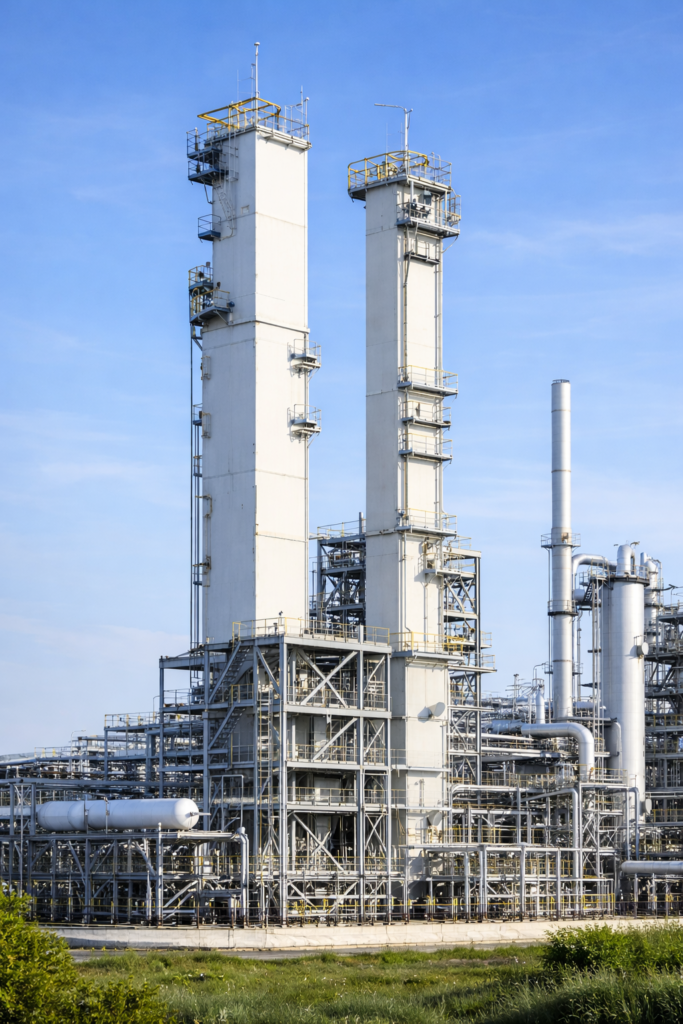
Cryogenic nitrogen plant operation plays a critical role in many industrial sectors where a reliable supply of high-purity nitrogen is required. Industries such as steel manufacturing, refineries, chemical processing, electronics production, and pharmaceutical facilities depend on stable nitrogen supply for process safety, inerting, and production operations.
Unlike pressure swing adsorption (PSA) systems, cryogenic nitrogen plants operate using low-temperature air separation technology, where atmospheric air is compressed, purified, cooled to cryogenic temperatures, and separated through distillation. This process enables the production of high-purity nitrogen suitable for demanding industrial applications.
Successful cryogenic nitrogen plant operation requires understanding several interconnected process systems including air compression, molecular sieve purification, cryogenic heat exchange, expansion refrigeration, and distillation column behavior. Each of these systems must operate in balance to maintain stable plant conditions and consistent nitrogen purity.
Because cryogenic plants operate within narrow temperature and pressure ranges, even small process deviations can gradually develop into operational disturbances. Problems such as nitrogen purity fluctuations, cold box freezing risks, startup instability, and increased energy consumption are often linked to process imbalance or equipment performance issues.
For this reason, effective cryogenic nitrogen plant operation depends not only on equipment reliability but also on the ability of plant engineers and operators to understand process interactions and diagnose operational problems early.
This engineering guide provides a practical overview of cryogenic nitrogen plant operation, explaining the major process systems, operational principles, and common challenges encountered in industrial nitrogen plants. The goal is to help plant engineers develop a clearer understanding of plant behavior and maintain stable, efficient plant performance.
Basic Process Overview of a Cryogenic Nitrogen Plant
In a cryogenic nitrogen plant operation, atmospheric air is first compressed and purified to remove contaminants such as moisture and carbon dioxide. These impurities must be removed because they freeze at cryogenic temperatures and can block passages inside the cold box and heat exchangers.
After purification, the compressed air enters the cryogenic heat exchanger system, where it is progressively cooled through counter-current heat exchange with returning cold process streams.
A portion of the cooled air is then expanded through a turbine expander, generating refrigeration that maintains the extremely low temperatures required inside the cold box.
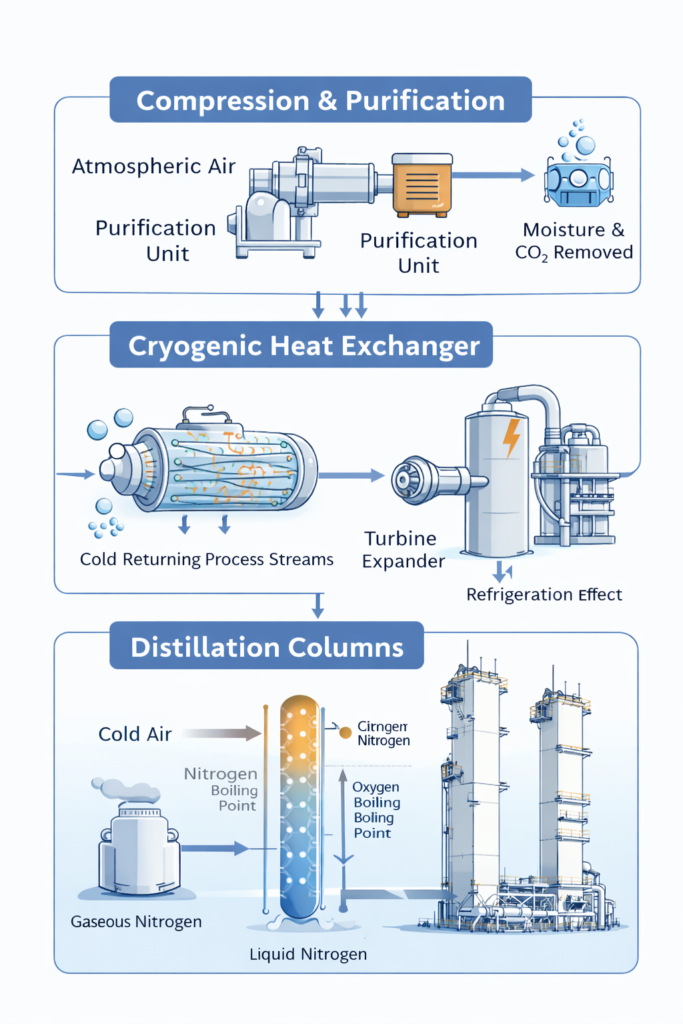
The cold air subsequently enters the distillation column system, where nitrogen and oxygen are separated based on their different boiling points.
Nitrogen, which has a lower boiling point than oxygen, rises through the column and is withdrawn as the product stream.
Depending on plant design and process requirements, the final product may be delivered as:
• gaseous nitrogen for industrial applications
• liquid nitrogen for storage and transport
Because all major sections of the plant are thermally and operationally interconnected, stable cryogenic nitrogen plant operation requires maintaining a careful balance between air flow, refrigeration generation, column pressure, and product withdrawal.
When this balance is disturbed, plant operators may experience operational problems such as:
• nitrogen purity fluctuations
• process instability and operational fluctuation
• cold box freezing risks
• increased energy consumption
• startup instability
• unexpected plant trips
This guide provides a practical engineering overview of cryogenic nitrogen plant operation, focusing on the process fundamentals required to maintain stable and reliable plant performance.
Major Process Sections of a Cryogenic Nitrogen Plant
A cryogenic nitrogen plant operation involves several interconnected process systems that work together to separate nitrogen from atmospheric air. Each section of the plant performs a specific function in compressing, purifying, cooling, and separating the air stream to produce high-purity nitrogen.
Understanding the role of these major process systems is essential for effective cryogenic nitrogen plant operation. When plant engineers clearly understand how these sections interact, they can diagnose operational disturbances more efficiently and maintain stable and reliable plant performance.
1. Air Compression
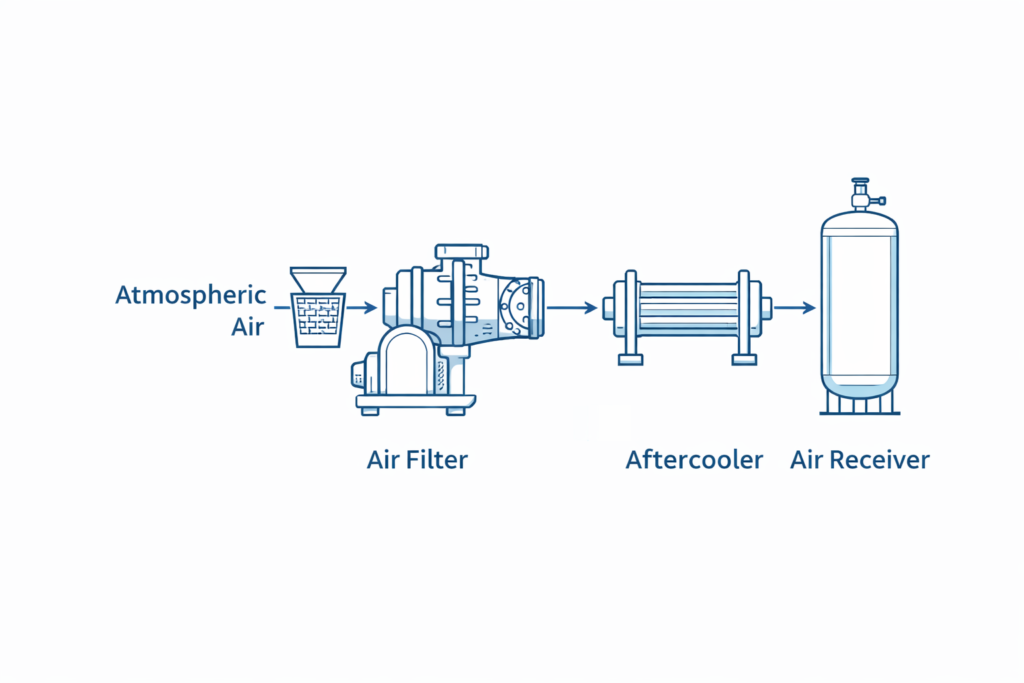
Atmospheric air is compressed to the required operating pressure using multi-stage air compressors. Intercoolers remove heat generated during compression and prepare the air for downstream purification.
Stable compressor performance is essential for maintaining plant capacity and energy efficiency.
2. Air
Purification
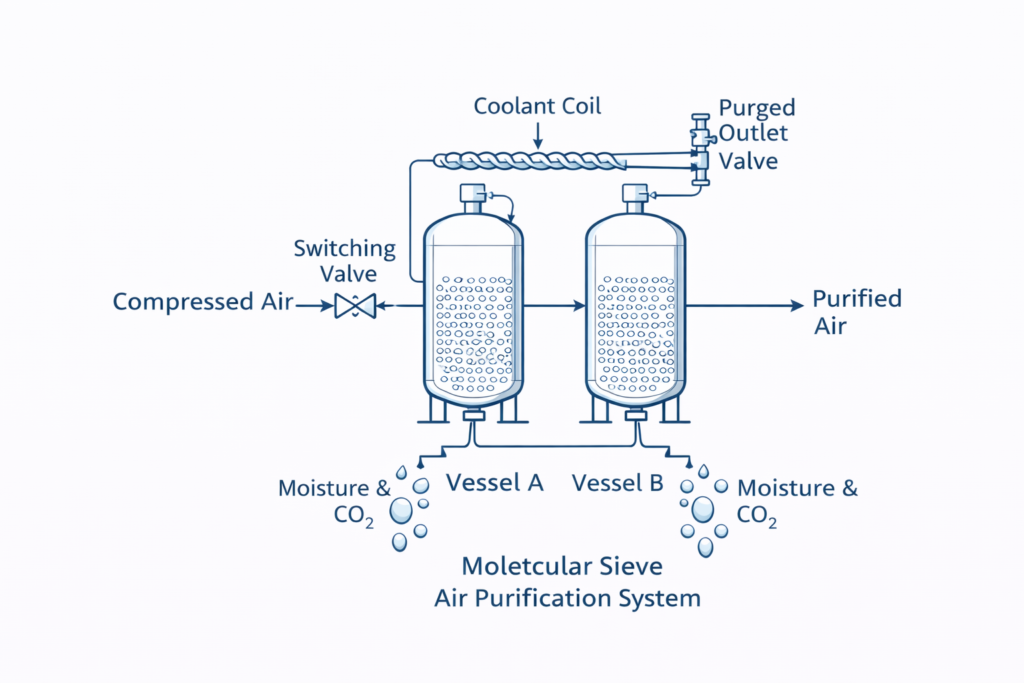
Before entering the cryogenic section, compressed air passes through molecular sieve adsorbers where moisture, carbon dioxide, and hydrocarbons are removed.
Proper purification protects the cold box from freezing and ensures reliable long-term plant operation.
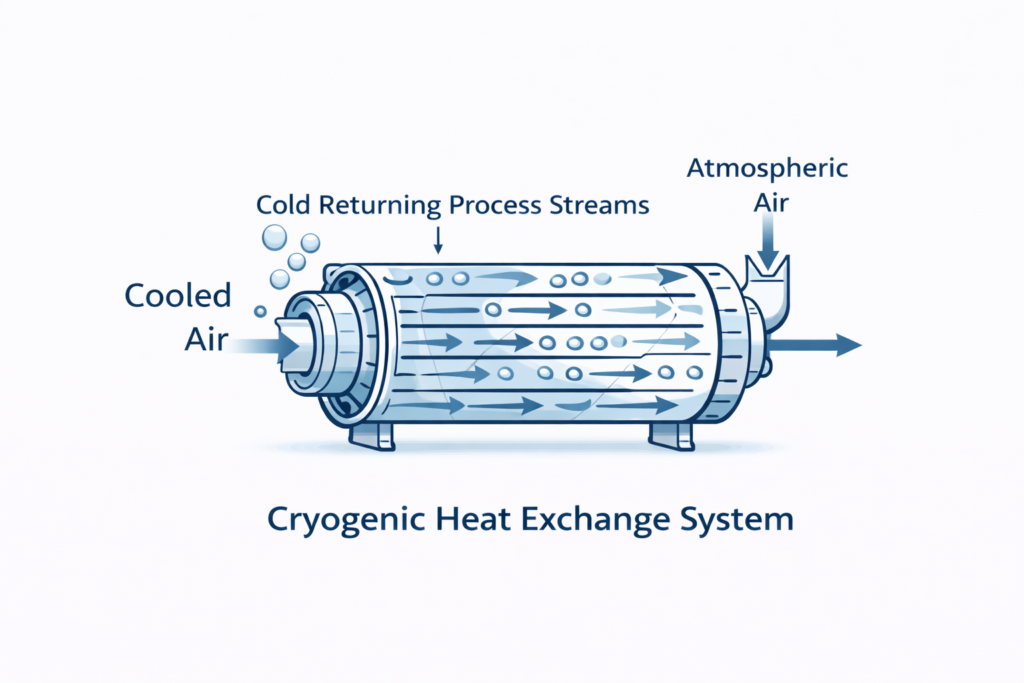
3. Cryogenic Heat Exchange
The purified air enters the main cryogenic heat exchanger where it is cooled by returning cold process streams.
This heat exchange process gradually lowers the air temperature to cryogenic conditions required for separation.
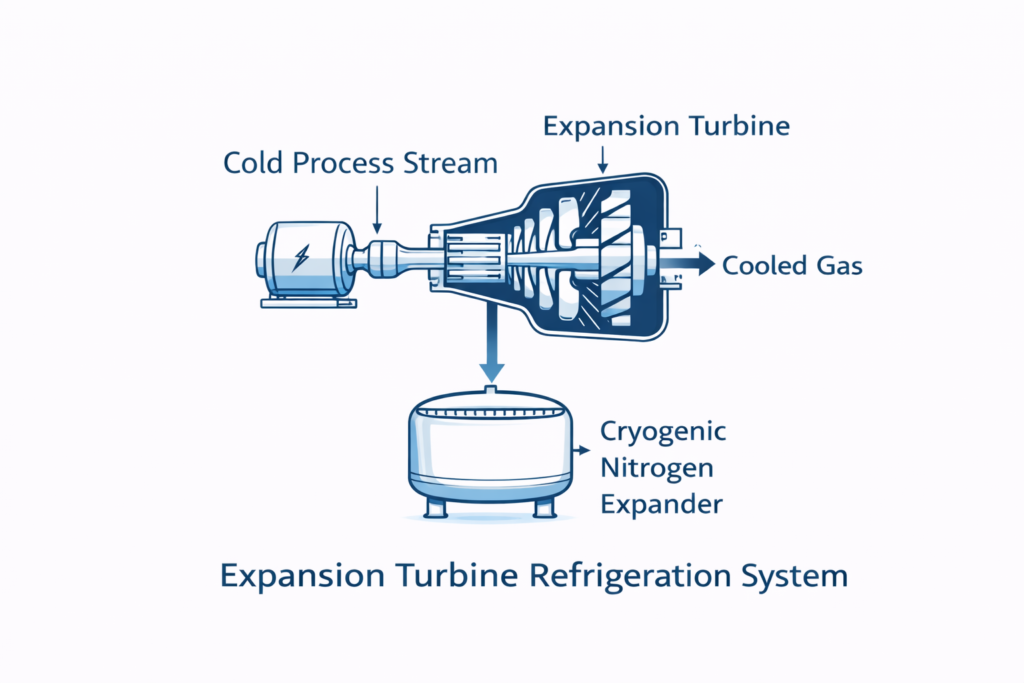
4. Expansion Refrigeration
Cryogenic refrigeration is generated through expansion turbines where high-pressure gas expands and cools significantly.
The refrigeration produced by the turbine maintains the low temperatures required inside the cold box.
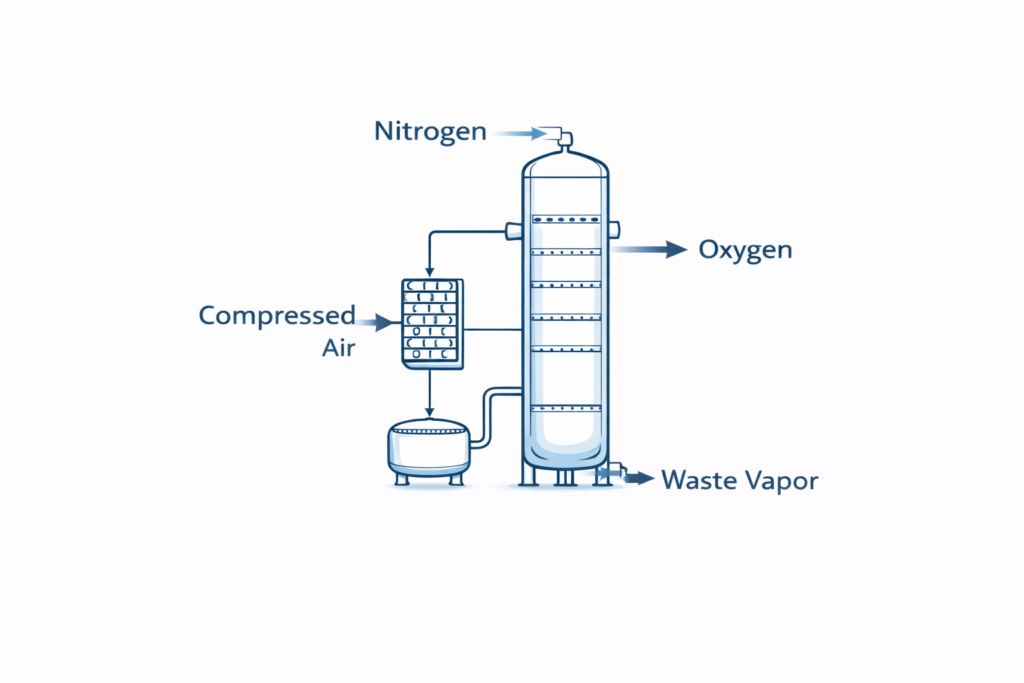
5. Cryogenic Distillation
Nitrogen and oxygen are separated inside cryogenic distillation columns based on their different boiling points.
Careful control of column pressure and reflux conditions is necessary to maintain nitrogen purity.
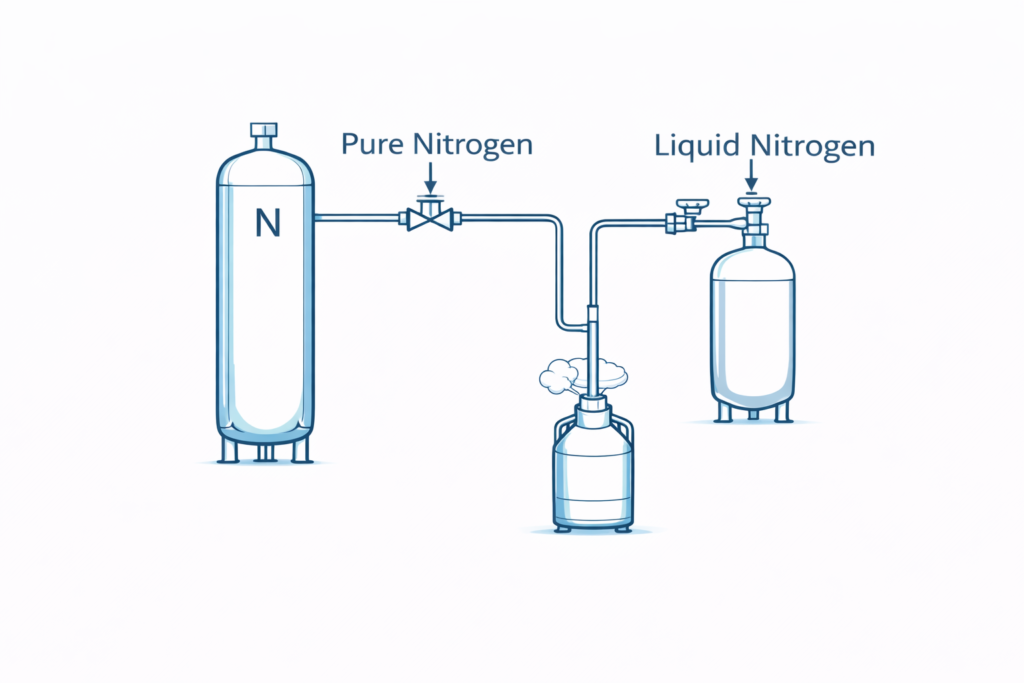
6. Product Nitrogen Delivery
After separation, nitrogen is withdrawn from the column system as gaseous nitrogen or liquid nitrogen depending on plant design.
The product nitrogen is delivered to downstream industrial users through pipelines or storage systems.
Air Compression System
The first stage of a cryogenic nitrogen plant is the air compression system, where atmospheric air is compressed to the required operating pressure.
Typical operating pressure ranges between 6 and 10 bar(g) depending on plant design.
The air compression system generally includes:
• multi-stage compressors
• intercoolers between stages
• moisture removal systems
• aftercoolers
The primary purpose of this section is to supply a steady and reliable stream of compressed air to the downstream purification system.
Operational Considerations
Operators must monitor several parameters in this section:
• compressor discharge pressure
• intercooler performance
• compressor vibration levels
• compressor energy consumption
Poor compressor performance can lead to:
• reduced plant capacity
• increased energy consumption
• unstable plant operation
Stable compressor performance is therefore critical for maintaining overall plant reliability.
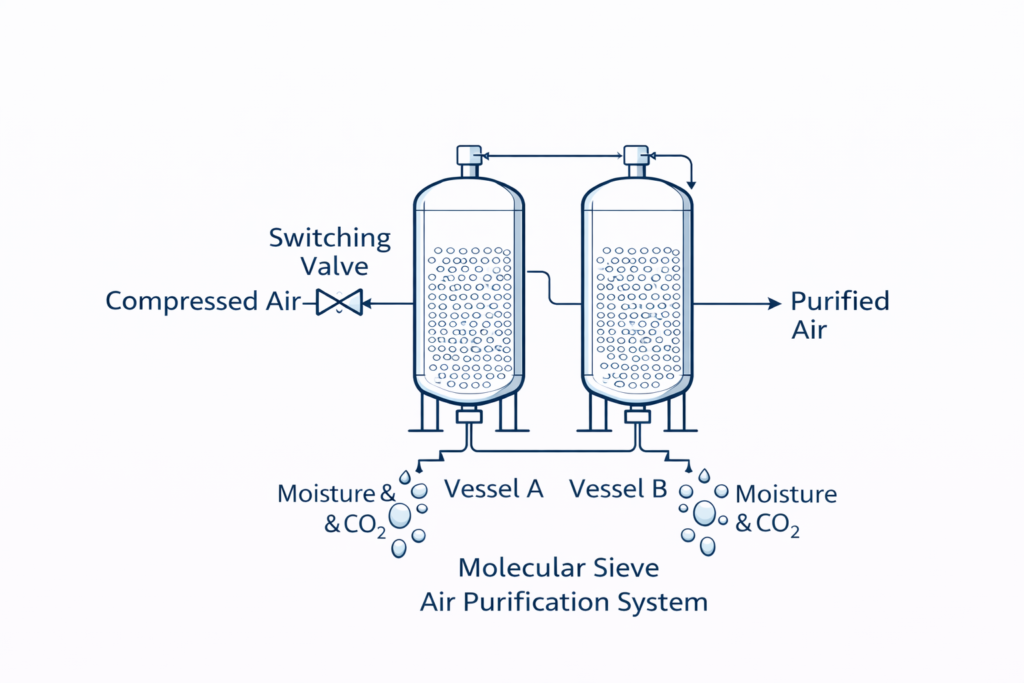
Molecular Sieve
Air Purification System
Before entering the cryogenic section, compressed air must be purified to remove contaminants that can freeze at low temperatures.
The air purification system removes:
• moisture (H₂O)
• carbon dioxide (CO₂)
• hydrocarbons
This purification is typically performed using dual-bed molecular sieve adsorption systems operating in cyclic mode.
One adsorber bed operates in adsorption mode, while the other bed undergoes regeneration.
Importance of Air Purification
If contaminants are not removed effectively, they can freeze inside the cold box and cause:
• heat exchanger blockage
• pressure drop increase
• process instability and operational fluctuation
• potential plant shutdown
Proper operation of the molecular sieve system is therefore essential for protecting the cryogenic equipment.
Cryogenic Heat Exchange System
After purification, the compressed air enters the main cryogenic heat exchanger located inside the cold box.
In this heat exchanger, the incoming air is cooled by counter-current heat exchange with returning cold product streams.
Temperatures decrease progressively from ambient conditions to approximately −170°C to −190°C.
This heat exchange process allows the air to approach cryogenic temperatures required for separation.
Importance of Heat Exchanger Performance
The cryogenic heat exchanger is one of the most critical components of the plant because it determines:
• overall plant energy efficiency
• temperature profile stability
• distillation column performance
Operational problems in the heat exchanger can lead to:
• temperature imbalance
• increased compressor load
• unstable column operation
Maintaining clean and stable heat exchanger operation is therefore essential for reliable plant performance.
Expansion Turbine Refrigeration System
Cryogenic plants require continuous refrigeration to maintain extremely low temperatures inside the cold box.
This refrigeration is produced using expansion turbines (expanders).
During expansion, high-pressure gas expands through the turbine and its temperature drops significantly due to the Joule-Thomson and expansion cooling effects.
This cooling provides the refrigeration required to sustain cryogenic conditions in the plant.
Key Operational Considerations
Operators must carefully monitor:
• expander inlet pressure
• expander outlet temperature
• turbine speed
• lubrication system performance
Expander performance directly affects:
• plant cooling balance
• startup stability
• nitrogen purity control
Cryogenic Distillation Column System
The core separation process occurs in the distillation column system.
Nitrogen and oxygen are separated based on their different boiling points.
Key components typically include:
• high-pressure column
• low-pressure column
• condenser-reboiler system
Within the columns, vapor and liquid phases interact through trays or packing to achieve the required separation.
Operational Balance
Stable column operation requires maintaining balance between:
• feed air flow
• column pressure levels
• reflux flow
• nitrogen product withdrawal
Any disturbance in these parameters can lead to:
• nitrogen purity fluctuations
• column instability
• process instability and operational fluctuation
Nitrogen Product System
After separation, nitrogen is withdrawn from the column system as either:
• gaseous nitrogen
• liquid nitrogen
Typical nitrogen purity levels range from:
99.5% to 99.999%
depending on plant design and operating conditions.
The product nitrogen is then delivered to the end user through pipelines or storage systems.
Key Objectives for Stable Plant Operation
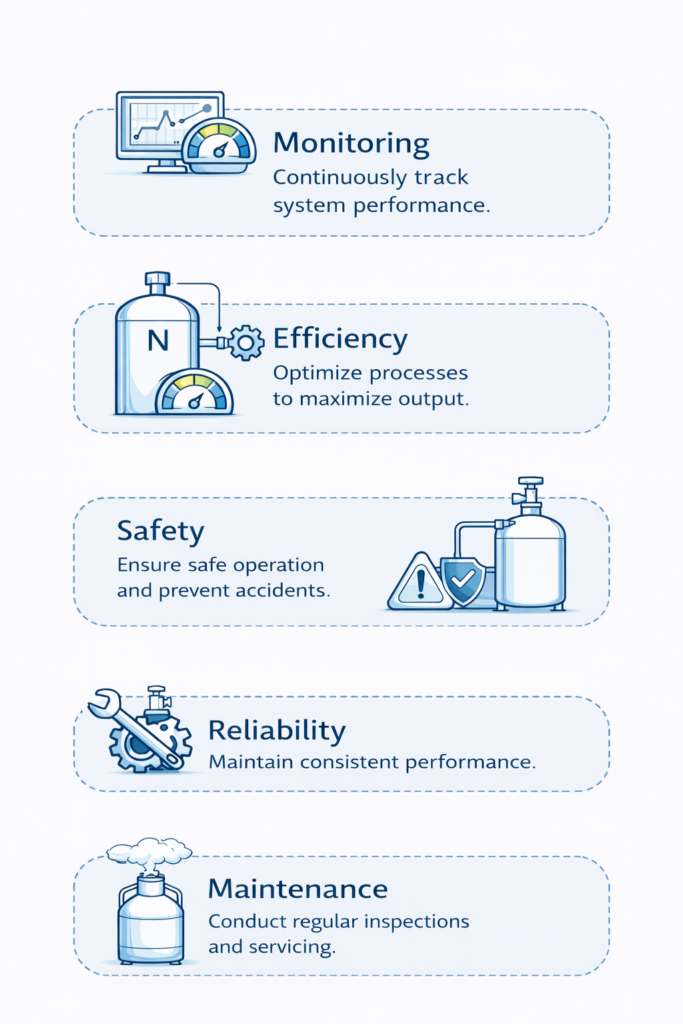
Maintaining stable cryogenic nitrogen plant operation requires careful control of several critical process variables. Because the major process systems of the plant are thermally and operationally interconnected, even small disturbances in one area can influence overall plant performance.
For reliable cryogenic nitrogen plant operation, operators must maintain proper balance between several key parameters, including:
• feed air flow rate
• refrigeration generation
• column pressure balance
• heat exchanger temperature profile
• product nitrogen withdrawal rate
Even small imbalances between these variables can gradually lead to operational instability, affecting nitrogen purity, plant efficiency, and overall process stability.
For this reason, experienced plant engineers rely heavily on trend monitoring and process understanding to maintain stable cryogenic nitrogen plant operation, rather than reacting only to alarms or sudden operational disturbances.
Common Operational Challenges in Cryogenic Nitrogen Plants
During normal cryogenic nitrogen plant operation, several types of operational disturbances may occur. These disturbances can originate from process imbalance, equipment performance issues, or control system deviations affecting different sections of the plant.
Because cryogenic air separation systems operate within narrow temperature and pressure limits, even small deviations in process conditions can gradually develop into noticeable operational problems.
Understanding the typical causes and early warning signs of these disturbances is essential for maintaining stable cryogenic nitrogen plant operation. When plant operators recognize these symptoms early, they can diagnose problems more quickly and take corrective actions before the disturbances affect overall plant performance.
Nitrogen Purity Fluctuations
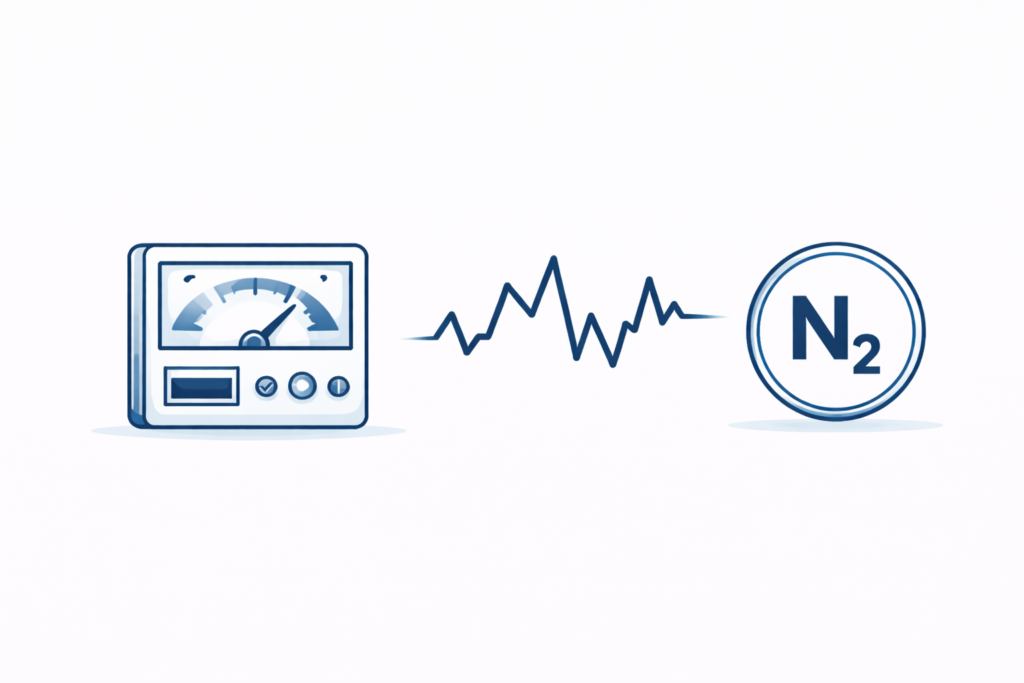
Nitrogen purity may fluctuate when the distillation column loses equilibrium. This is often caused by imbalances in feed air flow, reflux conditions, or refrigeration generation inside the cold box.
Early signs usually appear as gradual variations in nitrogen analyzer readings.
Cold Box Freezing
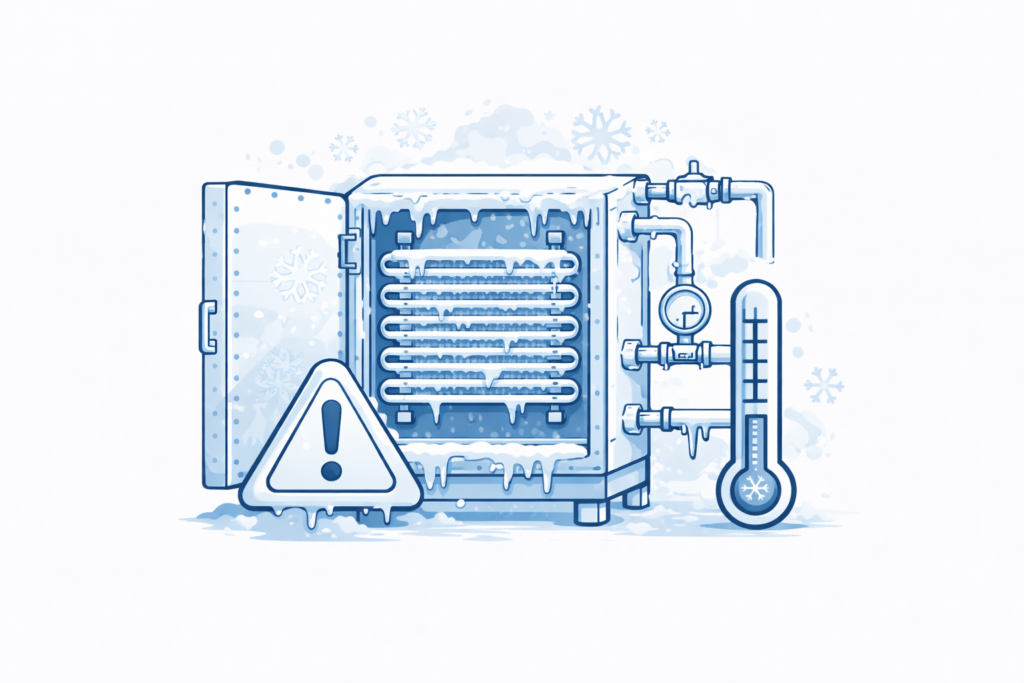
Cold box freezing occurs when moisture or carbon dioxide enters the cryogenic section due to incomplete purification in the molecular sieve system.
These contaminants freeze at cryogenic temperatures and can cause blockages in heat exchangers or process passages.

Startup Instability
Cryogenic nitrogen plants frequently experience instability during startup or cooldown phases.
During this period, temperature profiles inside the cold box are still developing and column equilibrium has not yet been fully established.
Increased Energy Consumption
Energy consumption may increase due to reduced efficiency in compressors, heat exchangers, or refrigeration systems.
Fouling in heat exchangers or improper operating conditions can increase the load on the air compressor.
Frequent Plant Trips
Unexpected plant trips may occur due to control system disturbances, expander problems, or abnormal pressure conditions.
Repeated trips usually indicate underlying process instability or equipment performance degradation.
Process Instability
Cryogenic nitrogen plants sometimes experience oscillations in pressure, temperature, or product purity when the process balance is disturbed.
This instability often develops gradually and can affect overall plant reliability if not diagnosed early.
Key Engineering Insights for Cryogenic Nitrogen Plant Operation
Stable cryogenic nitrogen plant operation depends on maintaining proper process balance between air compression, purification, cryogenic heat exchange, refrigeration generation, and distillation column operation. Because these systems are closely interconnected, even small disturbances in one section of the plant can gradually influence overall operating stability.
If these deviations are not identified and corrected early, they can eventually lead to several operational problems such as:
• nitrogen purity fluctuations
• process instability and operational fluctuation
• increased energy consumption
• unexpected plant trips
Maintaining reliable cryogenic nitrogen plant operation therefore requires a clear understanding of plant behavior and system interactions. Experienced plant engineers rely heavily on analyzing process trends and system responses to detect early signs of imbalance, rather than reacting only to alarms after operational disturbances occur.
Maintain Process Balance
Stable plant operation requires maintaining balance between feed air flow, refrigeration generation, column pressure and nitrogen product withdrawal. Disturbance in any one section can affect overall plant stability.
Operational Problems Develop Gradually
Most plant disturbances do not occur suddenly. Small deviations in temperature profiles, pressure levels or flow conditions can slowly evolve into nitrogen purity fluctuations or operational instability.
Trend Monitoring Enables Early Diagnosis
Continuous monitoring of plant trend data allows operators to detect early signs of process instability and take corrective action before the problem escalates into a major operational disturbance.
Related Engineering Guides
Effective cryogenic nitrogen plant operation involves several specialized systems including air purification, cryogenic refrigeration, and distillation column control. Engineers responsible for operating and troubleshooting these plants often require a deeper technical understanding of these subsystems and how they interact within the overall process.
The following engineering guides provide practical insights that support reliable cryogenic nitrogen plant operation, covering important topics such as plant performance, troubleshooting methods, and maintaining long-term operational stability.
Cryogenic Nitrogen Plant Troubleshooting Handbook
A practical engineering guide focused on diagnosing operational disturbances, identifying root causes, and resolving common problems in cryogenic nitrogen plants.
This guide explains systematic troubleshooting approaches used by experienced plant engineers.

Stability and Performance Optimization Guide
This resource explains how plant stability can be improved by maintaining proper process balance between refrigeration generation, feed air flow, and column operation.
It also discusses common causes of long-term operational instability.
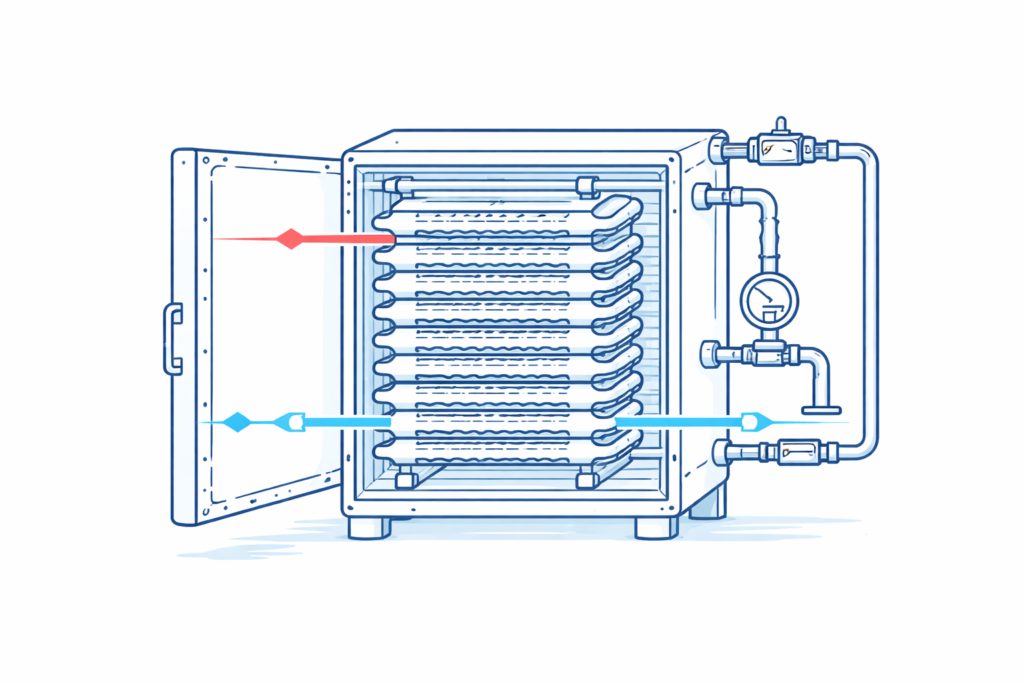
Cold Box Operation and Heat Exchanger Integrity Guide
The cold box contains the most sensitive cryogenic equipment in the plant. This guide explains heat exchanger performance, temperature profile stability, and operational practices required to avoid freezing and process disturbances.
Proper cold box management is essential for maintaining plant efficiency and reliability.
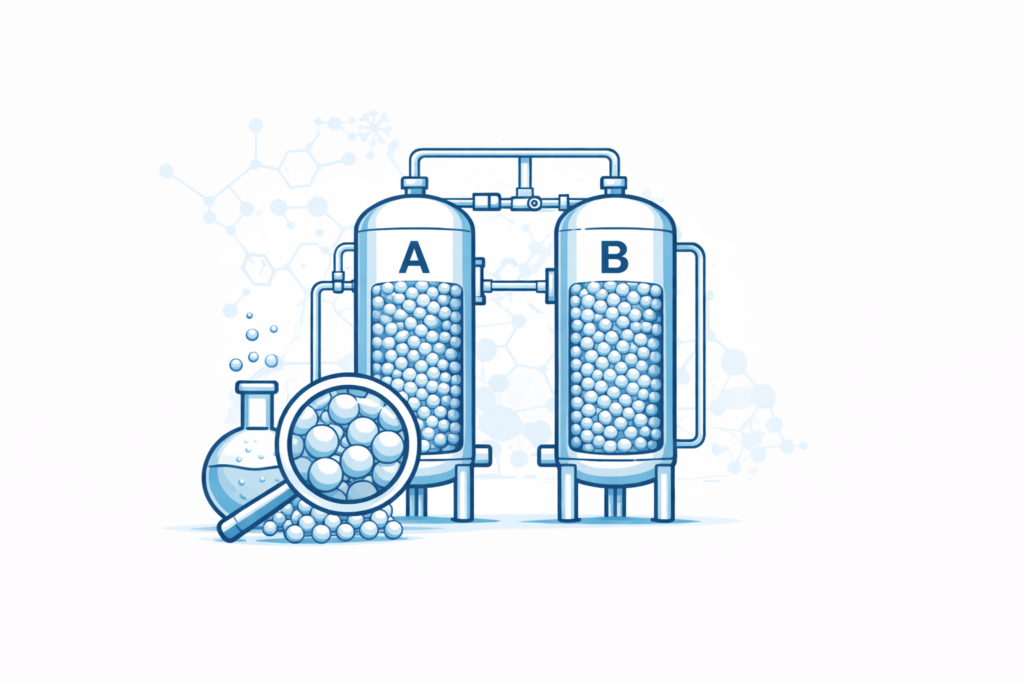
Molecular Sieve Systems in Cryogenic Nitrogen Plants
Air purification systems play a critical role in protecting cryogenic equipment from freezing. This guide explains molecular sieve operation, regeneration cycles, and common causes of purification system failures.
Cryogenic Nitrogen Plant Startup and Commissioning
A step-by-step engineering guide covering the key procedures required to safely start up and commission cryogenic nitrogen plants while establishing stable operating conditions.
Performance Guarantee Testing for Cryogenic Nitrogen Plants
Evaluate cryogenic nitrogen plant performance against purity, capacity, and energy guarantees.
A practical guide for accurate testing, troubleshooting, and performance validation.
Related Engineering Insights
These engineering insights provide deeper analysis of critical issues encountered during cryogenic nitrogen plant startup and commissioning, helping engineers understand process behavior, instability, and system interactions.
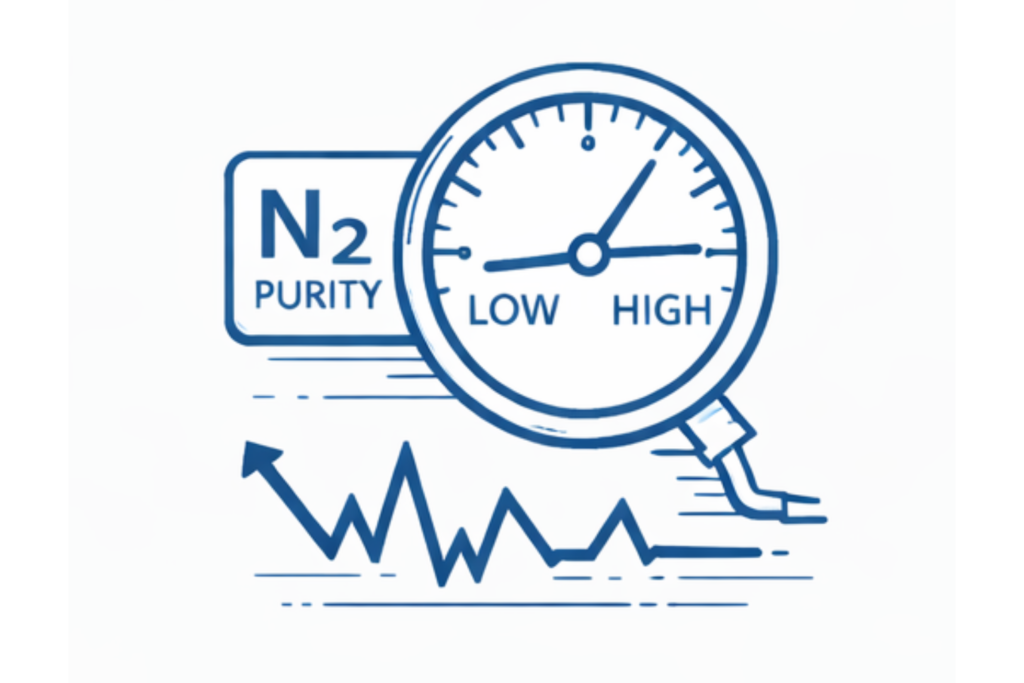
Why Nitrogen Plant Purity Fluctuates
Nitrogen purity fluctuations are often caused by distillation column imbalance, unstable reflux conditions, feed pressure variations, or analyzer drift. This article explains the engineering reasons behind purity instability and how plant engineers can diagnose and correct the underlying process disturbances.

Molecular Sieve Failure in Cryogenic Nitrogen Plants
The molecular sieve system plays a critical role in removing moisture, carbon dioxide, and hydrocarbons from the incoming air stream. This article explains the common causes of molecular sieve failures, including incomplete regeneration, switching valve problems, and adsorbent degradation, and how these issues affect cryogenic plant operation.
Cold Box Freezing in Cryogenic Nitrogen Plants
Cold box freezing occurs when contaminants enter the cryogenic section and freeze within the heat exchanger passages. This article examines the process mechanisms that lead to icing or freezing, the early warning signs engineers should monitor, and practical troubleshooting approaches to prevent major plant disruptions.
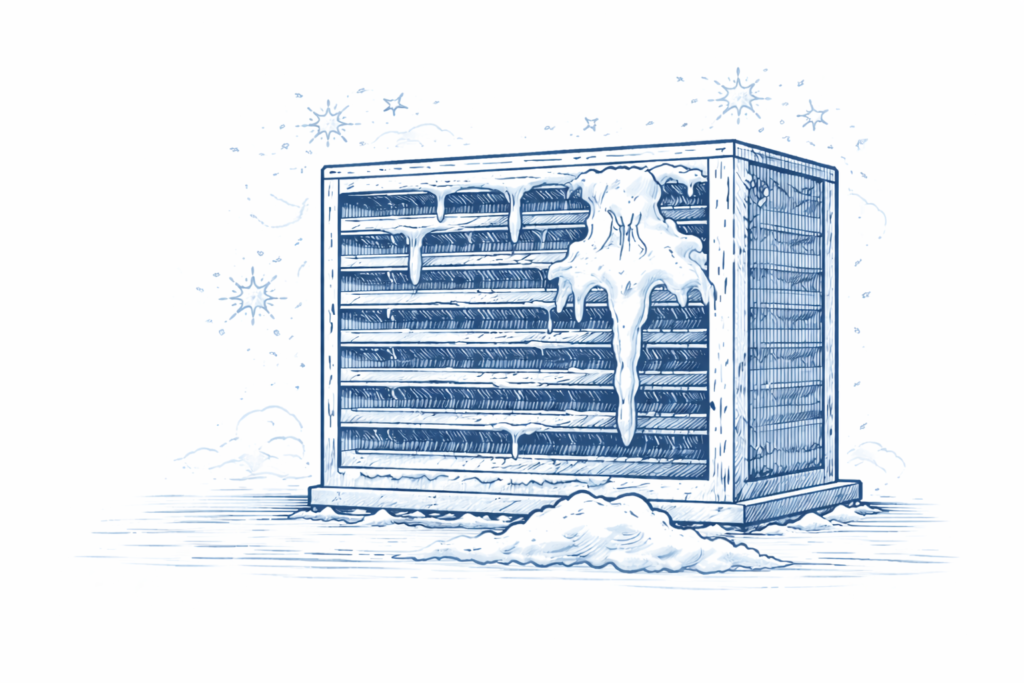
Cryogenic Heat Exchanger Icing in Nitrogen Plants
Engineering analysis of cryogenic heat exchanger icing, including moisture ingress, pretreatment system failure, and temperature imbalance during plant operation.
This issue is closely related to process instability and operational fluctuation observed in cryogenic nitrogen plants.
Use trend analysis techniques to identify early icing indicators and prevent performance degradation.
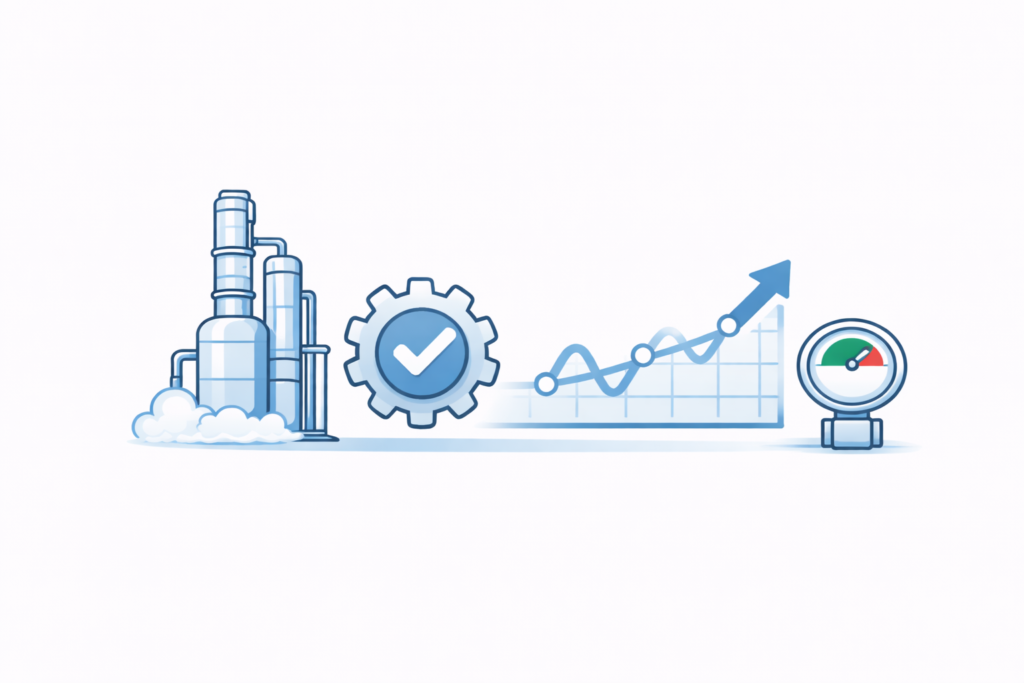
Diagnosing Nitrogen Plant Instability Using Trend Data
Modern cryogenic plants generate extensive process data through distributed control systems. This article explains how engineers can use trend analysis of pressure, temperature, and purity data to detect early signs of instability and identify hidden operational problems.
Why Nitrogen Plants Fail Performance Guarantee Tests
Engineering analysis of performance guarantee test failures, including deviations in nitrogen purity, energy consumption, and process efficiency under design conditions.
These failures are often linked to system imbalance, operational instability, and improper commissioning practices.
Apply structured performance analysis and stability improvement methods to identify root causes and restore plant performance.
Cryogenic Nitrogen Plant Engineering Toolkits
Effective cryogenic nitrogen plant operation and troubleshooting require not only theoretical knowledge but also practical engineering tools that help operators diagnose problems quickly and maintain stable plant performance.
To support plant engineers and operations teams, Graphic Medium provides specialized engineering toolkits and practical resources designed specifically to assist with cryogenic nitrogen plant operation and troubleshooting activities.
These resources are developed to help engineers strengthen diagnostic capability, better understand plant behavior, and respond more effectively to operational disturbances that can affect stable cryogenic nitrogen plant operation.

Cryogenic Nitrogen Plant Troubleshooting Toolkit
A structured engineering toolkit designed to help plant operators diagnose operational disturbances and identify root causes of plant instability.
Includes diagnostic frameworks and troubleshooting checklists used for cryogenic plant operations.

Cryogenic Nitrogen Plant Commissioning Toolkit
A practical resource for commissioning engineers responsible for plant startup, cooldown procedures, and early-stage operational stabilization.
Helps engineers manage commissioning risks and establish stable plant operation.

Cryogenic Plant Stability & Optimization Toolkit
A toolkit designed to help engineers improve plant stability, maintain process balance, and reduce operational fluctuations in cryogenic nitrogen plants.
Focus areas include refrigeration balance, column stability, and operational diagnostics.
Engineering Support for Cryogenic Nitrogen Plants
While this guide focuses on the fundamentals of cryogenic nitrogen plant operation, many industrial facilities require specialized engineering support for troubleshooting complex plant problems, stabilizing unstable process conditions, and improving plant performance.
Professional engineering consulting can help plant teams diagnose operational disturbances, identify root causes of instability, and implement practical solutions for reliable long-term plant operation.
Specialized engineering consulting support for cryogenic nitrogen plants is provided through Graphic Medium Consulting, an independent engineering practice focused on commissioning support, troubleshooting, and operational stability improvement for industrial nitrogen plants.

Advancing Practical Knowledge in Cryogenic Nitrogen Plant Engineering
Cryogenic nitrogen plant operation involves managing complex process systems where stable performance depends on a clear understanding of process interactions, refrigeration balance, and distillation column behavior.
GraphicMedium is dedicated to building a structured knowledge base that helps plant engineers, operators, and technical specialists develop a deeper understanding of cryogenic nitrogen plant operation and solve real operational challenges encountered in industrial nitrogen plants.
The engineering guides and technical insights published on this platform focus on practical operational knowledge, troubleshooting methods, and performance improvement strategies that support reliable and efficient cryogenic nitrogen plant operation.
Engineers are encouraged to explore additional engineering insights, troubleshooting guides, and practical resources available throughout the platform to strengthen their understanding of cryogenic plant systems and improve long-term operational stability.