Why Nitrogen Plants Fail Performance Guarantee Tests (and How to Recover)
A nitrogen plant performance guarantee failure is one of the most stressful events during commissioning. After months of installation and startup, the plant is expected to meet contractual purity, flow, and energy targets — yet many cryogenic nitrogen plants fail their first performance guarantee (PG) test.
When this happens, projects face:
Payment delays
Contractual penalties
Client disputes
Forced troubleshooting under time pressure
The good news?
Most nitrogen plant performance guarantee failures are predictable and recoverable when diagnosed systematically.
In this guide, you’ll learn:
What PG tests really evaluate
Why nitrogen plants fail performance guarantees
How to diagnose failures correctly
Step-by-step recovery methods
👉 Download the Free Commissioning & Performance Test Readiness Checklist (PDF) to verify readiness before scheduling your next test.
What Is a Performance Guarantee Test in Nitrogen Plants?
A performance guarantee test verifies whether the plant achieves its contractual design performance under steady-state conditions.
Typical guarantees include:
Nitrogen purity (% or ppm O₂)
Product flow rate
Specific power consumption (kWh/Nm³)
Continuous stable operation
Passing the test is mandatory for:
Final project acceptance
Warranty handover
Release of milestone payments
Failing the test results in a nitrogen plant performance guarantee failure, triggering corrective action and often re-testing.
For background on structured commissioning practices that prevent these issues, see our detailed Cryogenic Nitrogen Plant Commissioning Guide.
Why Nitrogen Plant Performance Guarantee Failure Happens (Even When the Plant Is “Running”)
Many plants appear operational but still fail PG tests because hidden inefficiencies only become visible during strict performance measurement.
Below are the most common root causes.
1️⃣ Incomplete Commissioning & Stabilization
If commissioning is rushed:
Control loops remain poorly tuned
Columns not fully stabilized
Temperature profiles still drifting
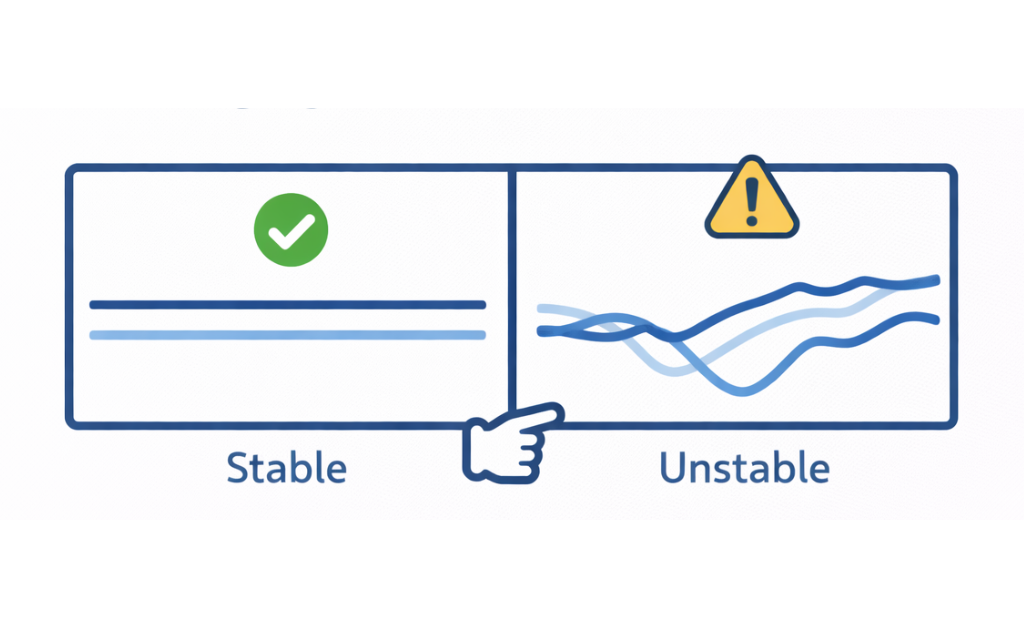
PG tests require steady-state operation, not “just running.”
Plants that skip structured commissioning frequently experience nitrogen plant performance guarantee failure.
2️⃣ Pretreatment System Underperformance
Pretreatment issues are the #1 hidden cause.
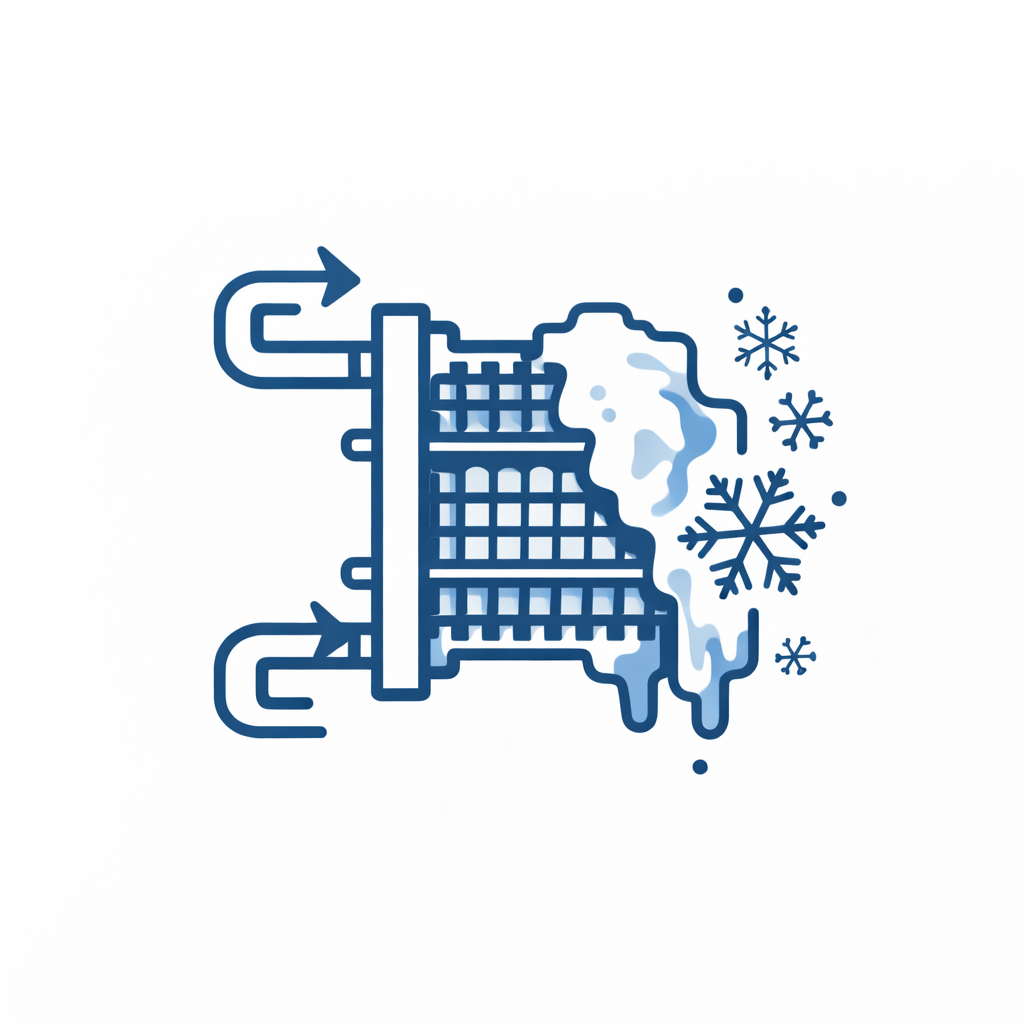
Moisture or CO₂ breakthrough leads to:
Partial exchanger freezing
Reduced heat transfer
Higher pressure drop
Lower capacity
Even minor contamination can reduce cold box efficiency during testing.
If you suspect pretreatment weakness, review our guide on How to Diagnose Molecular Sieve Failure in Nitrogen Plant Pretreatment Systems.
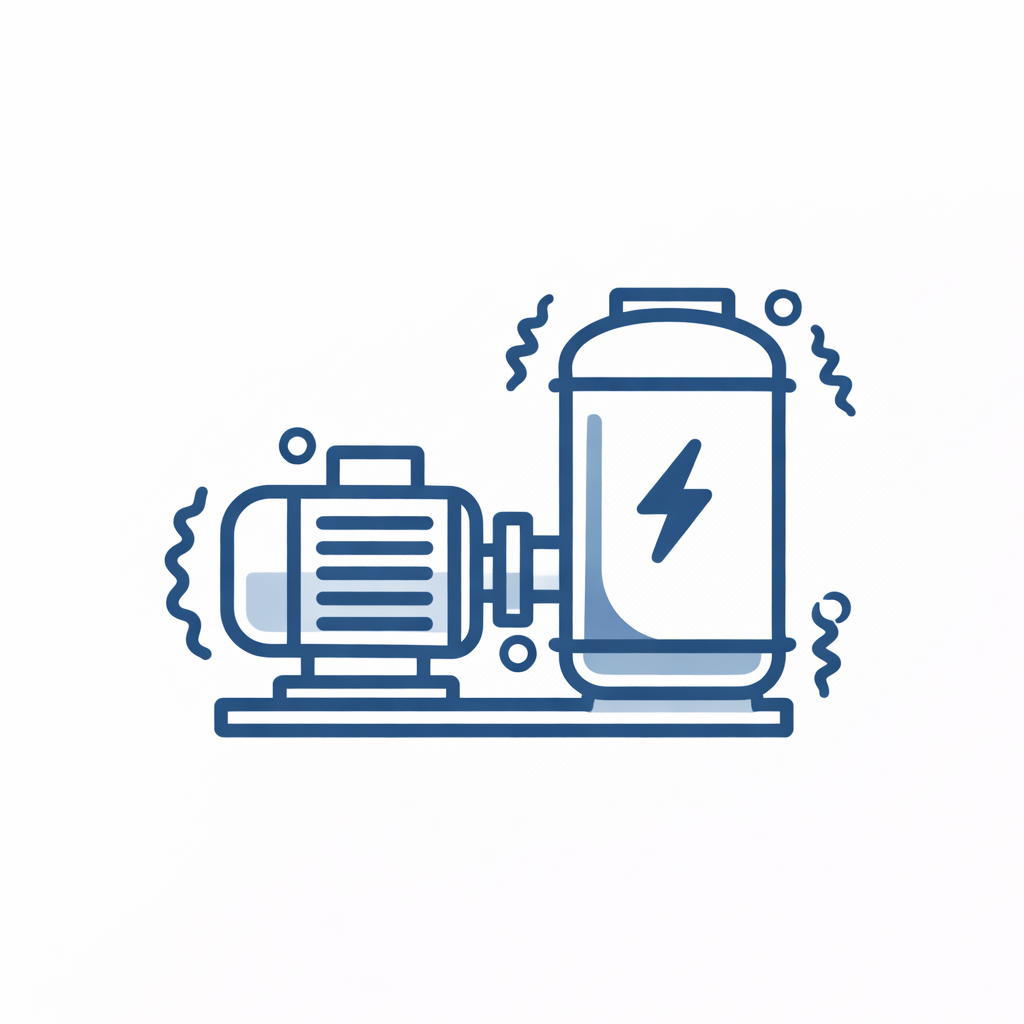
Compressor & Expander
Inefficiencies
Refrigeration imbalance reduces separation efficiency.
Common problems:
Incorrect loading
Vibration limits
Seal gas instability
Reduced expander output
Less refrigeration → lower purity and flow → PG failure.
4️⃣ Heat Exchanger Fouling or Maldistribution
Often caused by earlier freezing or contamination:
Temperature pinch increases
Pressure drop rises
Capacity drops
This frequently links back to cold box freezing risks, explained here: Cold Box Freezing in Nitrogen Plants – Causes & Prevention

5️⃣ Instrumentation & Analyzer Errors
Surprisingly common.
During PG tests:
Flow meter calibration errors
Analyzer lag
Power meter inaccuracies
can falsely indicate a nitrogen plant performance guarantee failure even when the plant is fine.
6️⃣ Operation Outside Design Envelope
Examples:
Wrong feed conditions
Ambient correction not applied
Improper operating modes
Guarantees only apply under defined conditions.
Warning Signs Before Performance Test Failure
If you see these, delay testing:
Difficulty stabilizing purity
Rising energy consumption
Increasing cold box pressure drop
Frequent alarms or trips
Testing during instability almost guarantees performance guarantee failure.
How to Diagnose Nitrogen Plant Performance Guarantee Failure
Follow a structured approach.
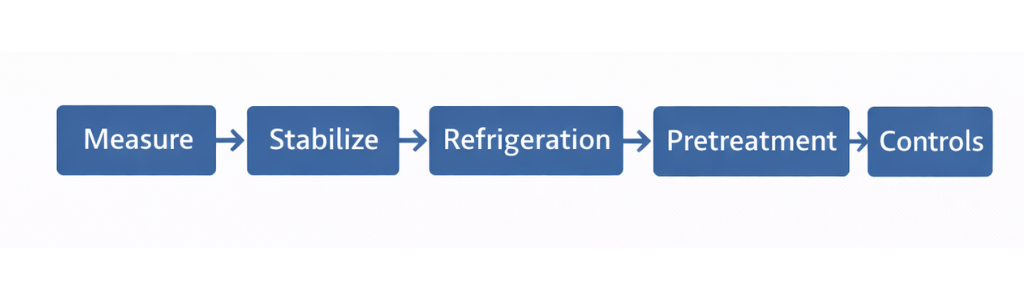
Step 1 – Verify Measurements
Confirm:
Flow meters calibrated
O₂ analyzers validated
Power meters accurate
Bad data = false failure.
Step 2 – Confirm Steady State
Trend for 24–48 hours:
Temperature
Pressure
Purity
Compressor load
No drift allowed during test window.
Step 3 – Check Refrigeration Balance
Verify:
Expander efficiency
Compressor discharge temp
Heat exchanger approach
Refrigeration loss directly causes nitrogen plant performance guarantee failure.
Step 4 – Reassess Pretreatment
Check:
Dew point stability
CO₂ breakthrough
Regeneration effectiveness
Pretreatment issues often appear as “cold box inefficiency.”
Step 5 – Review Control Strategy
Confirm:
Loop tuning
Valve response
Minimal manual intervention
Frequent operator corrections = unstable process.
These steps are fully structured inside the Commissioning & Stability Toolkit.
How to Recover After PG Test Failure
Stabilize Before Retesting
Never rush.
Fix root causes
Validate stability
Run internal trials
Remove
Bottlenecks
Examples:
Improve adsorber regeneration
Correct compressor loading
Fix exchanger maldistribution
Re-Tune
Controls
Proper tuning improves:
Column stability
Energy efficiency
Product consistency
Validate Test Conditions
Ensure:
Correct ambient correction
Proper feed specs
Contract test procedure followed
Tools That Reduce Nitrogen Plant Performance Guarantee Failure
Structured tools prevent guesswork.
The Commissioning & Stability Toolkit includes:
PG readiness checklists
Refrigeration balance logs
Pretreatment validation sheets
Test execution templates
Access the Troubleshooting & Stability Toolkit here →

When to Seek Expert Engineering Support
Call specialists when:
-
Repeated PG failures occur
-
Cold box damage suspected
-
Mechanical efficiency unclear
-
Contract deadlines critical
Graphic Medium Industrial Consulting provides targeted support for nitrogen plant performance guarantee failure recovery and stabilization.
External Technical Reference
For deeper theoretical background on cryogenic separation and performance principles, engineers may consult:
Air Products – Cryogenic Nitrogen Generation Systems Technical Resources
https://www.airproducts.com
❓ FAQ
What is the most common cause of nitrogen plant performance guarantee failure?
Pretreatment breakthrough or refrigeration imbalance.
Can PG tests be repeated?
Yes, but repeated failures increase contractual risk.
Do purity failures mean column design problems?
Usually not — most are operational or pretreatment related.
Is energy consumption always part of PG tests?
Often yes for medium and large plants.
Final Takeaway
A nitrogen plant performance guarantee failure is rarely caused by a single fault. It results from small inefficiencies accumulating across pretreatment, refrigeration, controls, and operation.
Plants that use structured diagnosis and readiness checks consistently pass PG tests faster — with fewer disputes and less downtime.
Download Performance Test Readiness Checklist
Use Commissioning & Stability Toolkit
Request Consulting Support
Passing PG tests isn’t luck — it’s disciplined engineering.