How to Diagnose Molecular Sieve Failure in Nitrogen Plant Pretreatment Systems
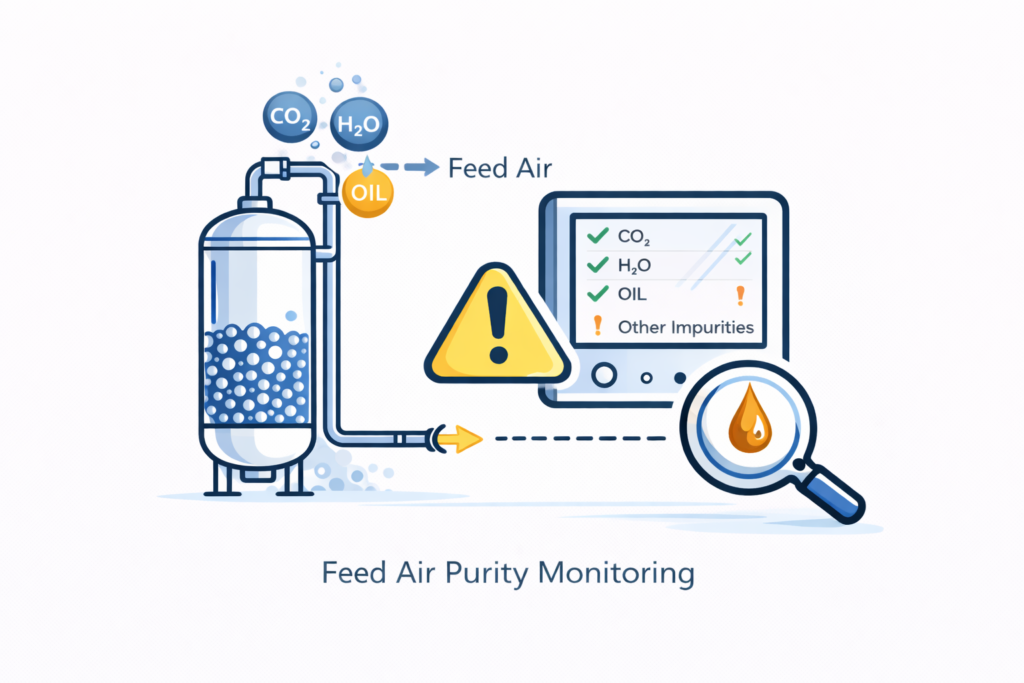
The pretreatment system is the first and most critical line of defense in a cryogenic nitrogen plant. When molecular sieve beds fail to remove moisture and CO₂ effectively, contaminants pass downstream into the cold box, where they freeze instantly. This leads to pressure drop, purity instability, exchanger blockage, and in severe cases, long plant shutdowns.
In practice, molecular sieve failure in nitrogen plant rarely appears as a sudden event. It develops gradually and often goes unnoticed until cold box symptoms begin to surface. Many freezing incidents later traced to the cold box actually originate upstream, especially during unstable startup and commissioning phases.
This guide explains:
-
What molecular sieve failure really means
-
Early symptoms engineers should watch for
-
Practical diagnostic methods
-
How to prevent repeat pretreatment failures
Engineers often rely on structured field tools such as a Moisture & CO₂ Impact Diagnostic Sheet to identify adsorption breakthrough and freezing risk before irreversible cold box damage occur.
In most cases, molecular sieve failure in nitrogen plant pretreatment systems is the hidden root cause behind downstream freezing and instability.
What Is Molecular Sieve Failure in Pretreatment Systems?
Molecular sieve failure in nitrogen plant does not necessarily mean the adsorbent material has physically collapsed. In most nitrogen plants, failure means the sieve is no longer removing moisture or CO₂ to the required outlet specifications before air enters cryogenic sections.
This loss of adsorption performance may result from:
-
Adsorbent saturation
-
Incomplete or ineffective regeneration
-
Channeling inside the bed
-
Mechanical degradation or dusting
-
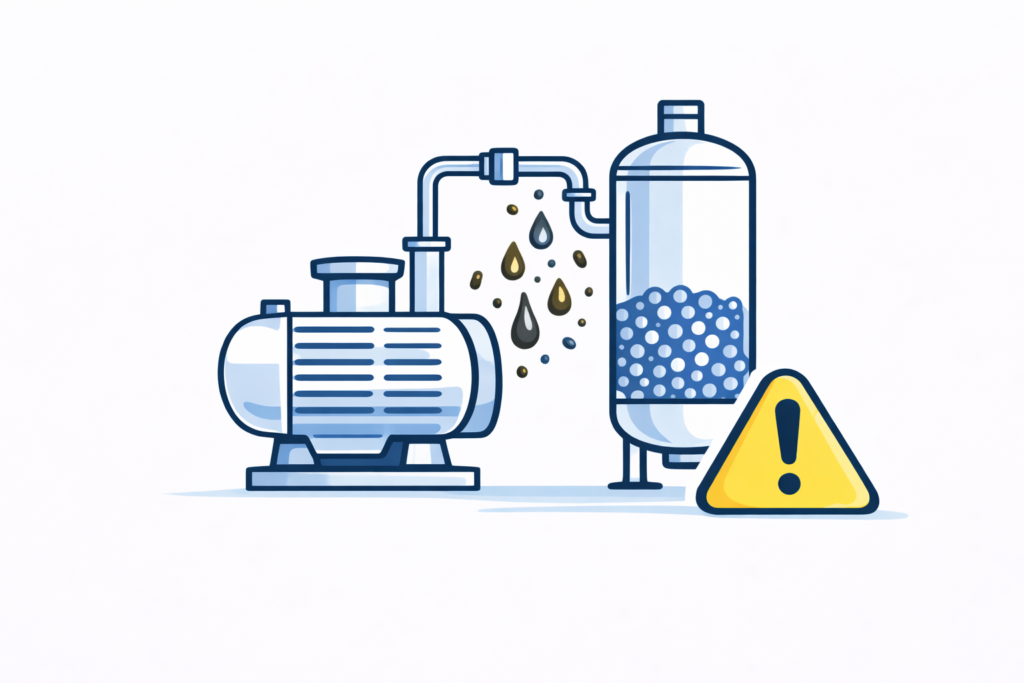
Oil or hydrocarbon contamination
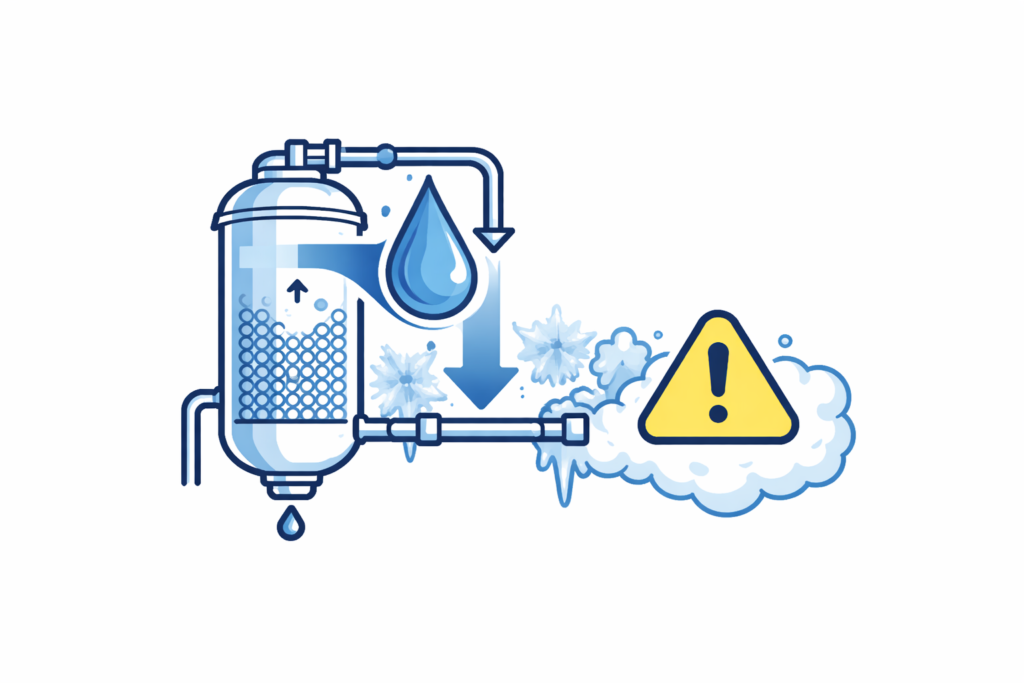
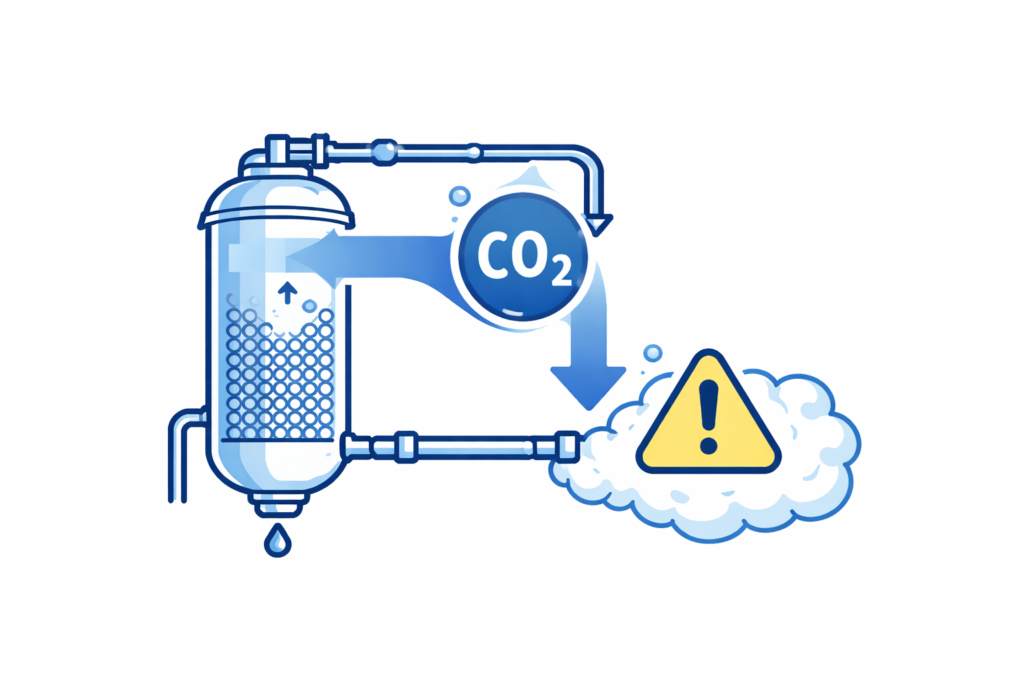
Any of these conditions allow trace contaminants to reach cryogenic temperatures, where even ppm-level moisture or CO₂ solidifies and accumulates.
Cryogenic process safety literature consistently highlights pretreatment breakthrough as one of the primary causes of internal exchanger plugging and cold box freezing in air separation systems.
Cryogenic engineering references explain that even trace levels of moisture and CO₂ can solidify at low temperatures and progressively plug heat exchangers in air separation systems.
Why Pretreatment Failure Is So Dangerous
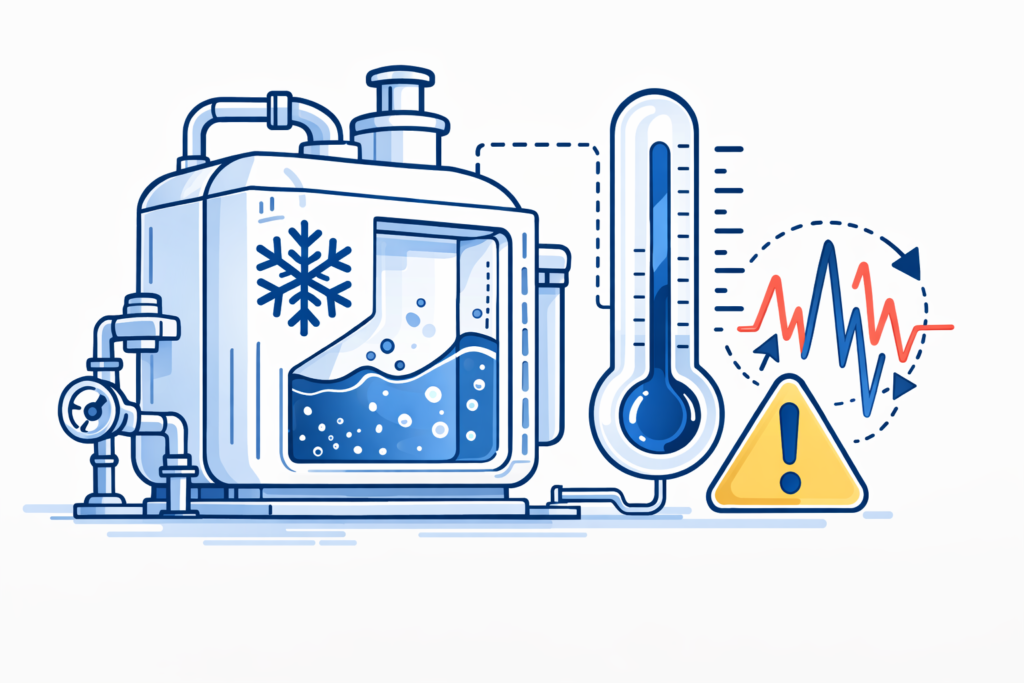
Pretreatment system problems in cryogenic nitrogen plants rarely cause immediate trips or alarms. Instead, they create delayed and hidden damage inside the cold box.
Common downstream consequences include:
-
Ice formation inside heat exchangers
-
Solid CO₂ blockages
-
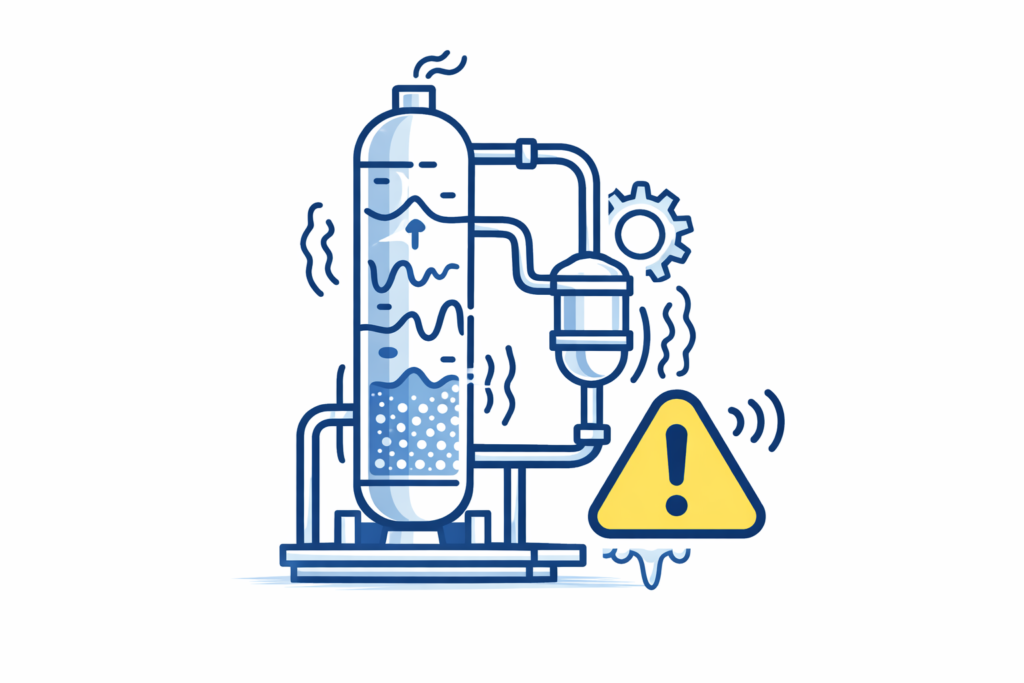
Distorted column temperature profiles
-
Expander and compressor instability
-
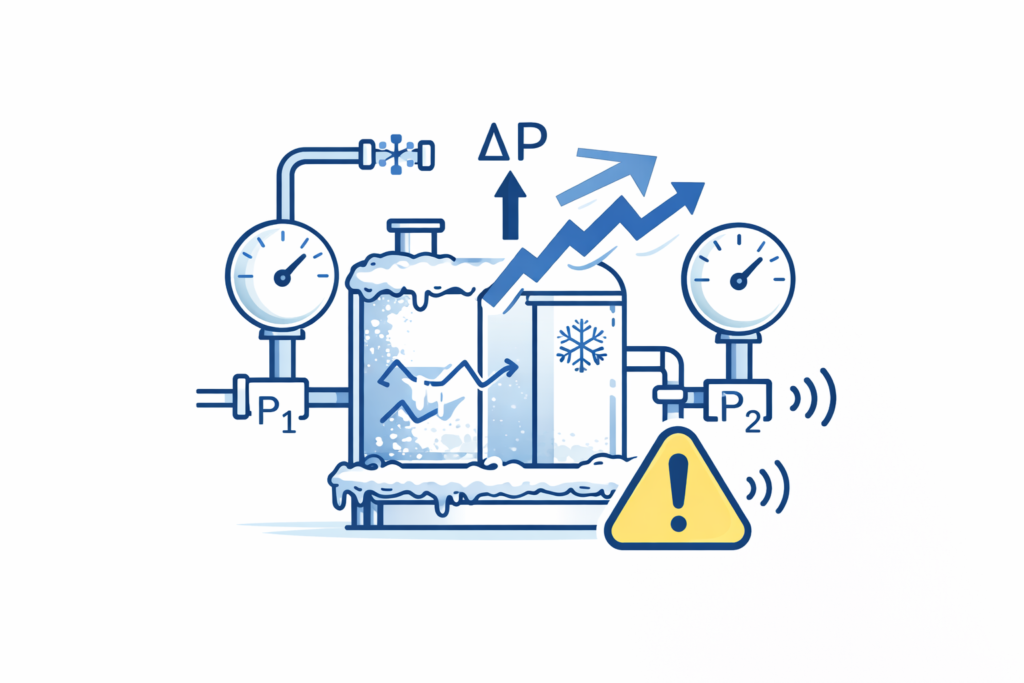
Gradually rising pressure drop
By the time these symptoms are obvious, internal freezing may already be well advanced. Many cold box freezing incidents trace back to unresolved pretreatment issues during startup or load changes.
These downstream effects closely resemble the symptoms seen during cold box freezing in nitrogen plants, making early diagnosis critical.
Left undiagnosed, molecular sieve failure in nitrogen plant operations almost always progresses into cold box performance issues.
Early Warning Signs of Molecular Sieve Problems
The earliest indicators of molecular sieve failure in nitrogen plant pretreatment appear as small but measurable trend deviations.
Dew Point
Drift
A slowly increasing outlet dew point or fluctuating values after bed switching often indicate declining adsorption capacity. Even small deviations are dangerous at cryogenic temperatures.
CO₂ Analyzer Instability
Intermittent CO₂ spikes or delayed analyzer response after switching beds can signal breakthrough events that alarms may not immediately capture.
Increasing Cold Box Pressure Drop
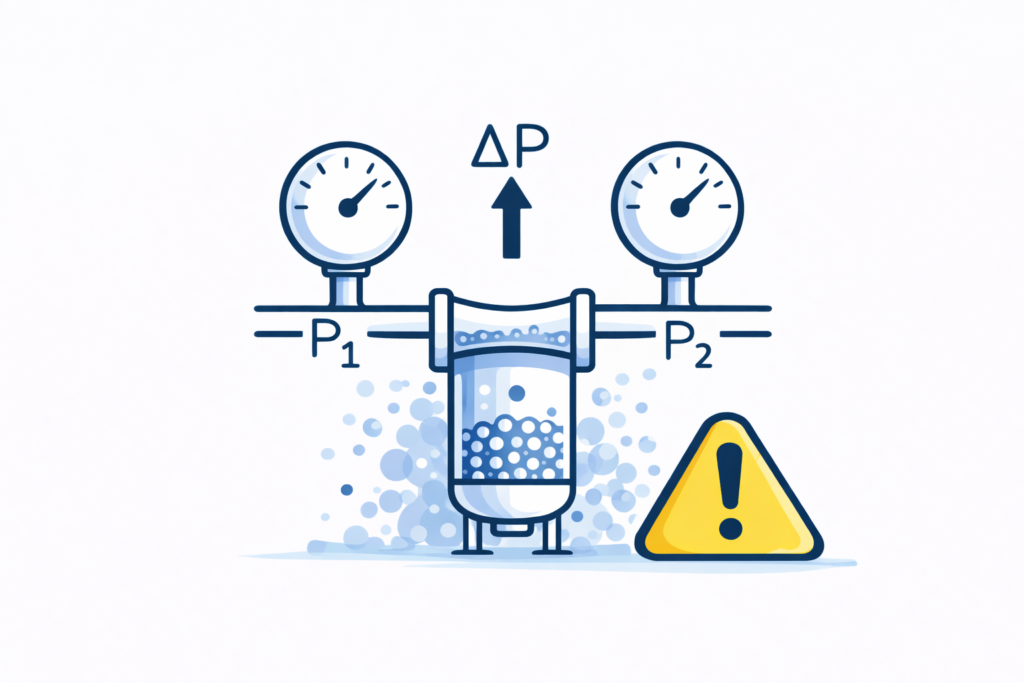
A rising pressure drop across the cold box is often the first indirect sign that moisture or CO₂ has entered cryogenic sections.
Unstable Nitrogen Purity
Flow restriction and internal freezing disturb column separation, leading to purity corrections that fail to hold steady.
Frequent Adsorber Switching
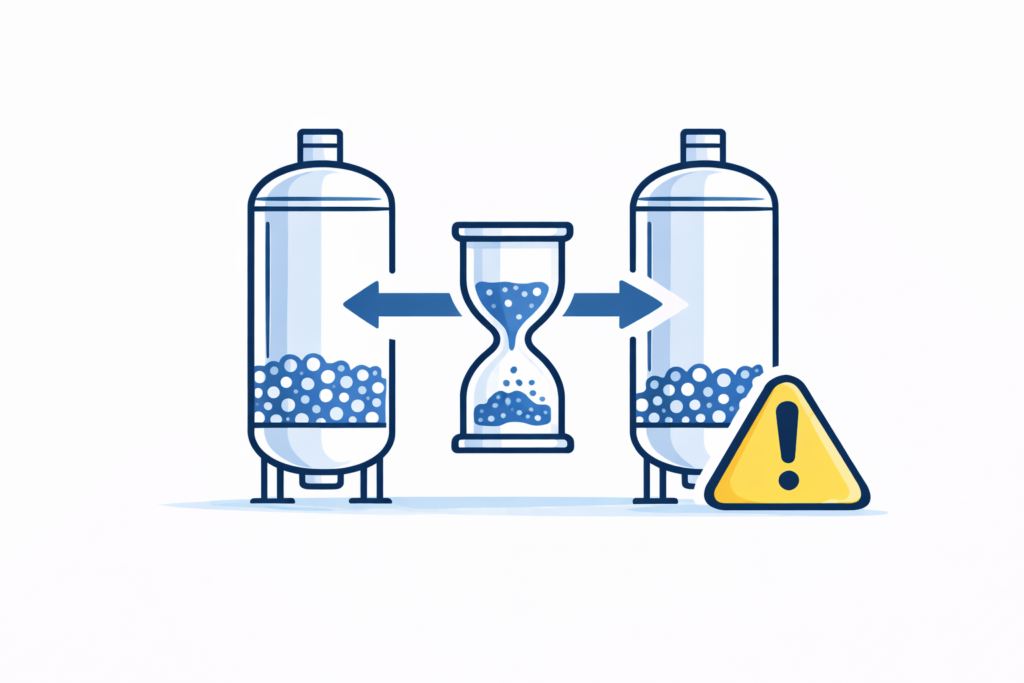
Shortened adsorption cycles typically indicate reduced bed capacity or channeling.
When these symptoms appear, engineers should focus on pretreatment diagnostics rather than adjusting cold box controls.
Common Causes of Molecular Sieve Failure
Each of the following mechanisms contributes directly to molecular sieve failure in nitrogen plant adsorber systems.
Incomplete Regeneration
Incomplete regeneration is one of the most frequent causes of molecular sieve failure in nitrogen plants. It may result from low regeneration temperature, insufficient purge flow, heater malfunction, or incorrect regeneration timing. Without full regeneration, adsorption capacity drops rapidly.
Channeling Inside Adsorber Beds
Uneven packing, bed settling, or dust accumulation can create preferential flow paths. Channeling allows contaminants to bypass active adsorption zones and reach the cold box.
Oil or Hydrocarbon Contamination
Compressor oil carryover coats sieve pores and permanently reduces adsorption capacity. Once contaminated, molecular sieve material usually cannot be recovered through regeneration and must be replaced.
Aging or Mechanical Degradation
Over time, pellet attrition, dust buildup, and increased void spaces reduce effective adsorption area and performance.
Valve Leakage During Bed Switching
Leakage during switching allows moist feed to enter regenerated beds prematurely. This issue is often overlooked during routine maintenance.
In practice, declining pretreatment system performance is the most common root cause behind adsorption breakthrough events.
How to Diagnose Pretreatment Failure Step by Step
A structured approach to diagnosing molecular sieve failure in nitrogen plant pretreatment systems prevents unnecessary cold box adjustments.
Step 1: Verify Analyzer Accuracy
Before suspecting process failure, dew point sensors and CO₂ analyzers should be calibrated and validated using reference gases. Faulty measurements can mislead troubleshooting.
Step 2: Compare Performance Between Beds
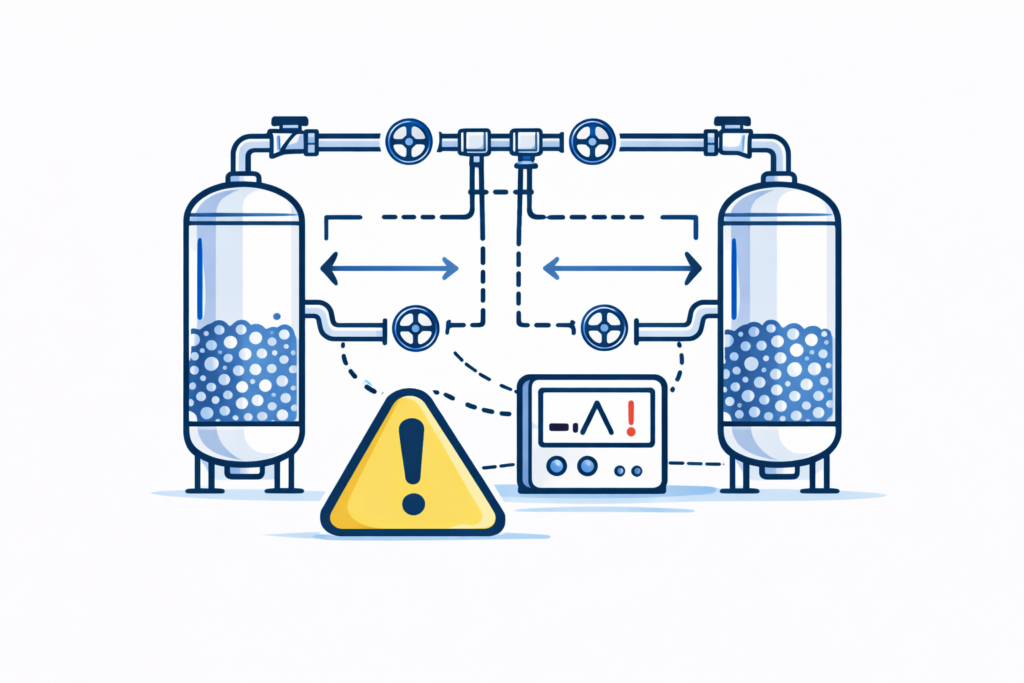
Track outlet dew point before and after switching, time to breakthrough, and regeneration recovery behavior. Significant differences between beds often indicate mechanical or flow distribution problems.
Step 3: Review Regeneration Parameters
Check heater outlet temperature, purge gas flow rate, and regeneration duration. Deviations from design values reduce adsorption recovery.
Step 4: Inspect Switching Valves and Seals
Valve leakage, timing mismatch, and actuator issues are frequent hidden causes of premature saturation.
Step 5: Evaluate Upstream Filtration and Oil Removal
Confirm that coalescers and oil removal systems are functioning correctly. Oil-contaminated sieve material cannot be restored by regeneration.
Using a structured Moisture & CO₂ Diagnostic Sheet helps engineers log these checks systematically during operation.
Preventing Repeat Molecular Sieve Failures
Preventing repeat molecular sieve failure in nitrogen plants requires trend-based control rather than alarm-based reaction.
Continuous monitoring of dew point trends, adsorber cycle efficiency, and pressure differential across beds allows early detection of declining performance. Standardized regeneration procedures should be followed consistently, with heater setpoints, purge flows, and cooldown sequences verified during commissioning and operation.
Linking pretreatment trends with cold box pressure and temperature behavior enables predictive intervention before freezing develops. Many plants strengthen these skills through structured digital learning and operational training for industrial engineers.
Preventing molecular sieve failure in nitrogen plant operation requires disciplined regeneration and continuous monitoring.
Tools for Pretreatment Troubleshooting
Effective nitrogen plant troubleshooting depends on structured field tools rather than trial-and-error adjustments. Commonly used tools include pretreatment performance logs, moisture breakthrough detection templates, regeneration validation checklists, and freeze-risk correlation charts.
These resources are consolidated in the Cryogenic Nitrogen Plant Troubleshooting Toolkit, which helps engineers identify root causes instead of reacting to symptoms.
Tools for Pretreatment Troubleshooting
Effective nitrogen plant troubleshooting depends on structured field tools rather than trial-and-error adjustments. Commonly used tools include pretreatment performance logs, moisture breakthrough detection templates, regeneration validation checklists, and freeze-risk correlation charts.
These resources are consolidated in the Cryogenic Nitrogen Plant Troubleshooting Toolkit, which helps engineers identify root causes instead of reacting to symptoms.
When to Involve Engineering Specialists
Specialist support should be considered when breakthrough continues after maintenance, cold box freezing recurs, adsorber performance deteriorates rapidly, or mechanical damage is suspected.
At this stage, detailed field diagnostics and system design review are required. Many plants rely on industrial consulting support to stabilize pretreatment systems and protect cold box integrity.
Final Takeaway
Molecular sieve failure in nitrogen plant pretreatment systems is the root cause behind most downstream freezing and stability problems. Early diagnosis, disciplined regeneration control, and trend-based monitoring are essential to protect cryogenic equipment from costly damage and downtime.
Engineers facing pretreatment instability should begin by reviewing moisture and CO₂ trends, applying structured troubleshooting tools, and escalating to expert support when failures persist. Strong pretreatment control is the foundation of stable cryogenic nitrogen plant operation.